Showing posts with label India. Show all posts

26 May 2011

Nuclear Insanity

by Dr. Vandana Shiva

Global Research, May 25, 2011
Navdanya International - 2011-05-24


Fukushima has raised, once again, the perennial questions about human fallibility and human frailty, about human hubris and man’s arrogance in thinking he can control nature. The earthquakes, the tsunami, the meltdown at Japan’s nuclear power plant are nature’s reminders of her power.
The scientific and industrial revolution was based on the idea that nature is dead, and the earth inert matter. The tragedy in Japan is a wakeup call from Mother Nature — an alarm to tell us she is alive and powerful, and that humans are powerless in her path. The ruined harbours, villages and towns, the ships, aeroplanes and cars tossed away by the angry waves as if they were tiny toys are reminders that should correct the assumption that man can dominate over nature — with technology, tools and industrial infrastructure.

The Fukushima disaster invites us to revisit the human-nature relationship. It also raises questions about the so-called "nuclear renaissance" as an answer to the climate and energy crisis. President of the Institute for Energy and Environmental Research, Arjun Makhijani, speaking at Public Interest Environmental Law Conference, said that "nuclear renaissance" would need 300 reactors every week and two-three uranium enrichment plants every year. The spent fuel would contain 90,000 bombs of plutonium per year if separated. Water required would be 10-20 million litres per day.

Following the Fukushima disaster, China, Germany, Switzerland, Israel, Malaysia, Thailand and the Philippines are reviewing their nuclear power programmes. As Alexander Glaser, assistant professor in the department of mechanical and aerospace engineering at Princeton University, observes, "It will take time to grasp the full impact of the unimaginable human tragedy unfolding after the earthquake and tsunami in Japan, but it is already clear that the proposition of a global nuclear renaissance ended on that day".

Across India, movements are growing against old and new nuclear power plants. Nuclear power plants are proposed at Haripur (West Bengal), Mithi Virdi (Gujarat), Madban (Maharashtra), Pitti Sonapur (Orissa), Chutka (Madhya Pradesh) and Kavada (Andhra Pradesh).

The 9,900 MW Jaitapur nuclear power plant, consisting of six nuclear reactors in Madban village, Ratnagiri district, Maharashtra, will be the world’s largest nuclear power plant if built. French state-owned nuclear engineering firm Areva and Indian state-owned operator Nuclear Power Corporation of India signed a $22-billion agreement in December 2010, to build six nuclear reactors in the presence of Nicolas Sarkozy, the French President, and Manmohan Singh, the Indian Prime Minister.

In the light of expected surge in orders following the France-India agreement, Areva started to hire 1,000 people a month.

Jaitapur is a seismically sensitive area and is prone to earthquakes. Yet, there is no plan for the disposal of 300 tonnes of nuclear waste that the plant will generate each year. The plant will require about 968 hectares of fertile agricultural land spread over five villages that the government claims is "barren".

Jaitapur is one of many nuclear power plants proposed on a thin strip of fertile coast land of Raigad, Ratnagiri and Sindhudurg districts — the estimated combined power generation will be 33,000 MW. This is the region that the Government of India wanted to be declared a world heritage site under the Man and Biosphere programme of Unesco. Villagers of the Konkan region have been protesting against the nuclear plant. They have formed Konkan Bachao Samiti and Janahit Seva Samiti and have refused to accept cheques for the forced land acquisition. Ten gram panchayats have resigned to protest the violation of the 73rd Amendment.

Jaitapur has been put under prohibitory orders and more than five people cannot gather. On April 18, 2011, policemen fired at protesters who were demonstrating against the proposed Nuclear Power Park at Jaitapur. One died and eight others were seriously injured. The 2,800 MW nuclear plant planned at Fatehbad, Haryana, involves the acquisition of 1,503 acre of fertile farmland. Eighty villages are protesting; two farmers have died during protests.

A nuclear power plant is planned in Chutkah, Madhya Pradesh, where 162 villages were earlier displaced by the Bargi dam. Forty-four villages are resisting the nuclear power plant. Dr Surender Gadakar, a physicist and anti-nuclear activist, describes nuclear power as a technology for boiling water that produces large quantities of poisons that need to be isolated from the environment for long durations of time. Plutonium, produced as nuclear waste, has a half life of 240,000 years, while the average life of nuclear reactors is 21 years. There is so far no proven safe system for nuclear waste disposal. Spent nuclear fuel has to be constantly cooled, and when cooling systems fail, we have a nuclear disaster. This is what happened at nuclear reactor 4 at Fukushima.

The focus on fossil fuels, CO2 emissions and climate change suddenly allowed nuclear energy to be offered as "clean" and "safe". But as a technology, nuclear power consumes more energy than it generates if the energy for cooling spent fuel for thousands of years is taken into account. In India, the costs of nuclear energy become even higher because nuclear power plants must grab land and displace people. The Narora nuclear plant in Uttar Pradesh, which is a mere 125 km from Delhi, displaced five villages. In 1993, there was a major fire and near meltdown in Narora.

The highest cost of nuclear energy in India is the destruction of democracy and constitutional rights. Nuclear power must undermine democracy. We witnessed this during the process of signing the US-India Nuclear Agreement. We witnessed it in the "cash for votes" scandal during the no-confidence motion in Parliament. And we witness it wherever a new nuclear power plant is planned. Physicist Sowmya Dutta reminds us that the world has potential for 17 terra watt nuclear energy, 700 terra watt wind energy and 86,000 terra watt of solar energy. Alternatives to nuclear energy are thousand times more abundant and million times less risky. To push nuclear plants after Fukushima is pure insanity.

Dr Vandana Shiva is the executive director of the Navdanya Trust.

Vandana Shiva is a frequent contributor to Global Research.  Global Research Articles by Vandana Shiva

23 December 2010

methane hydrates: Published Apr 3 2005 ( !!!) by The Guardian (UK)

US in race to unlock new energy source

by David Adam

More than a mile below the choppy Gulf of Mexico waters lies a vast, untapped source of energy. Locked in mysterious crystals, the sediment beneath the seabed holds enough natural gas to fuel America's energy-guzzling society for decades, or to bring about sufficient climate change to melt the planet's glaciers and cause catastrophic flooding, depending on whom you talk to.

No prizes for guessing the US government's preferred line. This week it will dispatch a drilling vessel to the region, on a mission to bring this virtually inexhaustible new supply of fossil fuel to power stations within a decade.

The ship will hunt for methane hydrates, a weird combination of gas and water produced in the crushing pressures deep within the earth - literally, ice that burns.

The stakes could not be higher: scientists reckon there could be more valuable carbon fuel stored in the vast methane hydrate deposits scattered under the world's seabed and Arctic permafrost than in all of the known reserves of coal, oil and gas put together.

"The amount of energy there is just too big to ignore," said Bahman Tohidi, head of the centre for gas hydrate research at Heriot Watt University in Edinburgh. "It's not easy, but it's not something we can say we can't do so let's forget about it."

Britain may miss out on any future methane hydrate boom - the North Sea is too shallow and no deposits have been found in the deeper waters further north - but other countries have recognised their potential. Japan, India and Korea, as well as the United States, are investing millions of pounds in hydrate research.
Ray Boswell, who heads the hydrate programme at the US department of energy's national energy technology laboratory, said the US was determined to be the first to mine the resource.

"Commercially viable production is definitely realistic within a decade. The world is investing in hydrates, and one reason for us to do this is to maintain our leadership position in this emerging technology."

Its new project will see the drilling vessel Uncle John spend about a month in the Gulf of Mexico, where it will bore down to two of the largest expected methane hydrate deposits in the region. Scientists on the ship will collect samples for experiments to see how the methane might be freed and transported to the surface.

This is harder than it sounds. In some deposits the crystals occur in thick layers, in others they are found as smaller nuggets. Puncture one hydrate reservoir and the giant release of gas can disrupt drilling, pierce another and getting the methane out is like sucking porridge through a straw.

This unpredictable nature means energy companies traditionally view hydrates as a nuisance. This gives them a joint interest with the US government as both sides want to know where the crystals are - one to avoid them and the other to exploit them.


Mr Boswell said:

"We have a marriage of near-term industry interests and longer-term government interests. If they develop the ability to detect hydrates for the purpose of avoiding them, that's useful for people who want to do the exact same thing for the purpose of finding them."
Devinder Mahajan, a chemist at the US department of energy's laboratory in Brookhaven, is looking for ways to encourage subsea hydrate deposits to release their methane. He has developed a pressurised tank that allows scientists to study hydrate formation. "You fill the vessel with water and sediment, put in methane gas and cool it down under high pressure. After a few hours, the hydrates form, you can actually see it. They look like ice, but they're not," he said. "This is a very important issue, tied to our future national energy security."

Hydrates on land are easier to get at, and in 2003 a team of oil companies and scientists from Canada, Japan, India, Germany and the US showed it was possible to produce methane from the icy deposits below Canada's Northwest Territories. BP and the US government are carrying out similar experiments in Alaska.
Environmental groups oppose attempts to extract methane from hydrate reserves.

Roger Higman, a climate change campaigner with Friends of the Earth, said: 

"The Americans are desperately looking around trying to boost their fossil fuels because they think the oil is going to run out or there's going to be a scarcity. The actual scarcity is in the space the atmosphere has for taking the carbon dioxide that burning methane produces."

He added: 

"We already have enough fossil fuel in the world that, if burnt, will ruin the world's climate. Rather than look for more, we need to keep the oil, gas and coal we already know about underground and develop alternative sources of energy, principally renewables."

Paul Johnston, a scientist in the Greenpeace laboratory at Exeter University, warned that disturbing hydrate deposits under the seabed was a risky strategy.

"There are legitimate concerns that attempts to tap into these reserves could cause very widespread destabilisation of the seabed and damage to ecosystems," 
 he said.

Methane is a far more potent greenhouse gas than carbon dioxide, he said, and any released during production would make global warming worse.

Mr Boswell said methane was more environmentally friendly than oil and coal, because it produced less carbon dioxide when burnt.

"The prudent approach is to address all the avenues for supplying future energy," he said. "People who say it has to be one or the other, I think, are putting too many eggs in one basket."

19 November 2007

A little more on Economic and Political weekly; nuclear fantasie and more

Wish WE had a journal like this!!

THE HANDSTAND

DECEMBER 2005

The Invisible Intellectual

By Sudhanva Deshpande
ZNet Commentary
March 14, 2004


Unobtrusive, withdrawn, almost shy, he died as he lived: quietly, without fuss, in his sleep. Krishna Raj was responsible for creating, single-handedly, one of the most incredible intellectual institutions of our times, a journal called Economic and Political Weekly (EPW).

India boasts of one of the most vibrant democratic intellectual cultures anywhere in the world, even if the actual realization of political democracy on the ground remains imperfect, uneven, flawed, skewed, and currently - under the right wing dispensation that rules at the centre and in several states - under grave threat. The mark of this democratic intellectual culture is the vast variety of opinion that gets expressed in the media, and indeed in the very wide range of platforms that are available, in spite of growing corporatization of the media, for the thinking and concerned citizen to air his or her views.

While India has more than a dozen major languages - and each one of these languages has a robust intellectual and political culture - English is today undeniably the major language of intellectual discourse. And it is in English that we have four remarkable periodicals.

One is Mainstream, a magazine analysing current affairs, edited for long years by the late Nikhil Chakravartty. Then there is Seminar, a monthly devoted to debating a single problem from a variety of standpoints in each issue, edited by the husband-wife team of Raj and Romesh Thapar. Neither is alive today, but the journal continues publication with vigour. The youngest publication is Frontline, a newsmagazine edited by N. Ram.

While Mainstream has lost some of its sparkle after the death of its founder editor, Seminar, by its very nature, only commissions articles and caters to a somewhat shifting readership in each issue. Aijaz Ahmad, in the preface of his latest book 'Iraq, Afghanistan and the Imperialism of Our Time', rates Frontline the best English language newsmagazine anywhere in the world, and his verdict is hard to contest. But it is also to be noted that Frontline is the publication of The Hindu, a family-owned group of newspapers with a long and distinguished history, manned by professional journalists.

The most remarkable in this list of remarkable publications, the most open, democratic platform, is EPW.

To those unacquainted with India, it would be hard to explain the enormity of EPW's prestige and its achievements. Unlike any academic journal I know of from anywhere in the world, EPW was born, and has remained, a weekly.

For close to forty years, the journal's pages have been a clearing house of serious ideas on politics, economics, history, sociology, anthropology, and often the sciences as well. In addition to its weekly quota of some four or five academic papers, EPW also publishes, every year, reviews of agriculture, labour, industry, management and gender studies, consisting of about half a dozen commissioned papers by leading authorities in each field.

The very best of Indian social science research has been published by EPW, and often non-Indian academics have chosen to publish theoretical papers here rather than in journals of the west. As an academic journal, EPW holds its own against the best in the world. I have personally known academics who have waited for an year or more to get their name into EPW, for being published there is a mark of recognition for the quality of your research. An EPW citation invariably occupies pride of place in the curriculum vitae of a young scholar in any university anywhere in the world.

In this democratic republic of ideas, an unknown research scholar from an obscure part of the land gets as much space and prominence as an Amartya Sen or Romila Thapar. Over the years, senior bureaucrats, behind the protective shield of pseudonyms, have used the columns of EPW to critique government policy.

There is not a single debate of academic or political importance that has not animated its pages over the last three decades or more, be it the mode of production debate, or the question of imperialism, or underdevelopment, or the debt crisis of the third world, or the debates around subaltern historiography, or on the nature and direction of the Indian polity, or on questions of gender, caste, culture and environment. And remarkably for what was, for a long time, viewed as a journal of the (non-party) left, EPW has opened its pages to virtually every shade of rigorous thought.

But unlike any scholarly journal I know, EPW has also provided lavish space to commentaries on current issues, to columns by a number of top-class but somewhat idiosyncratic writers, to pithy and incisive editorials on a bewildering range of subjects of public concern, and to longer pieces that set out to provoke academic or political debate. In addition, EPW also publishes tables and tables of impeccably researched economic data and statistics, a lively letters to the editor column, and book reviews as well as review articles.

EPW defies every stereotype. It is a small, independent journal employing some twenty staff members on less than modest wages, but its professionalism is the envy of the best and biggest. Not a single issue has ever been delayed for any reason, including the death of its editor. Every single piece that appears in EPW is carefully and meticulously edited for style as well as content. It looks spartan, unostentatious, it is printed on inexpensive newsprint, carries no photographs, and makes no concessions to visual flourish, not even the use of fine typefaces or comfortable inter-line leading.

It is page after page of tightly composed text, and expects to be read with the same urgency as a dictionary or medical reference book. In fact, its functionality is itself an aesthetic, like those old, rugged, metal-bodied SLR cameras.

For a publication that looks nearly intimidating, EPW has phenomenal reach and circulation. University dons as much as undergraduates, corporate bigwigs and financial sector managers, bureaucrats and political leaders, social and political activists, anybody who has anything to do with the world of ideas and the state of the nation reads EPW.

We have all grown up on EPW, debating passionately this or that question that the journal threw at us, waiting anxiously for the issue next week to see how the debate was turning out. And the thrill of receiving the first acceptance note from the editor would surpass for a young scholar the thrill of many weightier honours in future life.

In the 1990s, as the neoliberal reform programme of the Indian economy gathered pace, EPW switched sides and began arguing in favour of the policies of liberalization and globalization.

Opinion on this policy shift was bitterly divided. Left intellectuals, particularly economists, felt a sense of betrayal, rightly so, and some of the best known among them boycotted EPW, perhaps not so rightly. Non- and anti-left liberals welcomed the change, celebrating EPW's 'glasnost'. Whatever one's opinion on the editorial shift, it is uncontested that the journal itself maintained high standards and commanded huge readership.

There is simply no getting away from it: EPW is a magnificent and unique intellectual institution.

On the left, we often think of movements as being more important than individuals, and perhaps they are, but in the process we underrate the individuals who build structures that enable movements to live and thrive.

Krishna Raj was one such man.

A master editor of other people's writing, he also wrote editorials on virtually every subject with care, economy and power. EPW is not a refereed journal. It didn't need to be, not with Krishna Raj in charge. He could debate with the best on most issues, but he chose an anonymous existence, never appearing on television, never granting interviews in print, never signing petitions.

Of all of India's public intellectuals, Krishna Raj was without doubt the most invisible, though arguably the most influential. EPW was his life's passion, his stage and his voice. The journal is what it is because of him, and it is a perfect reflection of his own personality: open, inviting, rigorous, unostentatious, quiet, curious, understated, fiercely independent, forceful.

And his personal integrity was at all times absolutely above the slightest reproach. Even when he turned pro-globalization, he did so not for personal gain - the only individual about whom I can say this - but because he genuinely believed he was right.

Apart from earning for EPW unprecedented stature and goodwill, Krishna Raj also put in place managerial and professional structures - including the ability to raise advertising revenue - that will ensure that EPW will continue to flourish for a long time to come. True to character then, Krishna Raj has ensured that we will not miss him.

But we still will; even those of us who, like me, had minimal personal contact with that gentle, charming man. He touched us all.
........................................................................................

EXAMPLE OF EPW ARTICLE
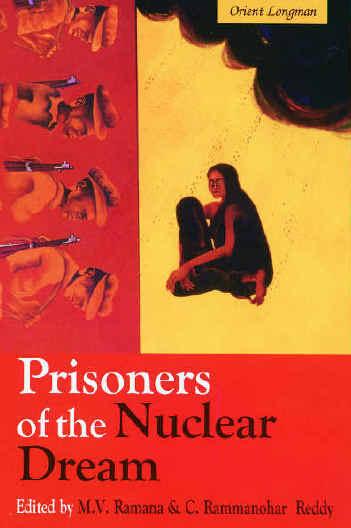
BOOK REVIEW: India's Nuclear Fantasies: Costs and Ethics

Prisoners of the Nuclear Dream (Itty Abraham In 'Economic and Political Weekly' Dated 28th June 2003)

This volume is the latest and most com- prehensive collection of essays arguing against nuclear weapons in the sub-continent, taking forward and adding to the findings, insights and arguments found in Praful Bidwai and Achin Vanaik’s path-breaking South Asia on a Short Fuse1 and Smithu Kothari and Zia Mian’s extensive collection of essays and opinion pieces published following the tests of 1998.2

Amartya Sen’s essay, ‘India and the Bomb’, offers the most direct entry point to some of the key questions at stake in the nuclear problem in south Asia. His lucid contribution raises a number of critical issues that can be used to map other articles which go into particular issues in greater depth. These include the tactical and strategic costs of the tests, implications of nuclearisation at a global level, the cost factor, the ethics of nuclearisation, and the anxieties of a post-colonial elite.

On the central question of what India gained from going nuclear, Sen’s answer is, very little. At the domestic politics level, it didn’t help the BJP win state elections. At the tactical level Sen says nuclearisation constrained Indian conventional military options in the efforts to expel the intruders and regain the heights of Kargil.

At the strategic level, it allowed Pakistan to overcome its conventional weakness and claim parity with India on a nuclear scale. These points and the dangers inherent in the Kargil conflict are brought to the fore by Ejaz Haider, a senior editor of Lahore’s Daily Times and Friday Times, in one of the few pieces in the volume not written by an analyst of Indian origin. He reminds us that at least a dozen nuclear threats were made by officials on either side during the conflict, making a mockery of the idea of nuclear weapons deterring conflict; the reverse if anything was true. In fact, he argues, nuclear weapons emboldened the Pakistani military leadership to undertake the operation in the first place. “Pakistan saw its nuclear weapons capability as an ‘equaliser’ against India’s conventional military superiority” (p 136). Ultimately, he notes, international pressure prevented escalation and allowed the cessation of conflict, another blow to Indian strategic policy which seeks to keep the region free of foreign influence.

At the global level, nuclearisation alienated China and hardly furthered Indian ambitions to become a permanent member of the Security Council. Kanti Bajpai addresses the China question directly. He argues that while Indian decision-makers have seen in China the ultimate rationale for their nuclear programme, this perception is fatally flawed. Bajpai demonstrates this in two ways: first, by an examination of China’s India policy and foreign policy objectives, and second, by discussing the China-Pakistan relationship. He notes that “India has never figured in China’s threat cosmology in any serious fashion” (p 36). While Bajpai is realist enough to argue that the Middle Kingdom needs to be watched carefully and that India’s relative ‘military weakness’ is being ignored (p 39), he notes that China has already obtained what it needs as regards the contested border. In other words, in relation to India, China is the status quo power, India the revisionist one. Bajpai stresses the value of the ongoing rounds of discussions between the two countries and suggests that it is hardly in India’s interest to create a permanent enemy of China. That may be so, the hardliners would say, but what of Chinese support of Pakistan? In the most provocative section of his paper, he offers a series of hypothetical reasons for Chinese support of Pakistan, all of which have nothing to do with India. His basic point is, does China really need Pakistan to deter or defeat India? Although Chinese support for Pakistan makes India edgy and nervous, is China supporting Pakistan for other reasons altogether? Bajpai proposes that Chinese assistance to Pakistan has more to do with rewarding Pakistan for its constantcy, limiting US influence in the region, and keeping Muslim separatists in Xinjiang in check.

If this assistance upsets India, that’s a price China is willing to pay. Bajpai suggests that perhaps Pakistan has also shared western military technology with China, for which there is not yet much evidence. What seems more plausible is that Pakistan is also valuable to China in relation to North Korea, offering a low cost and hands-off means of subverting US non-proliferation policy and support for Taiwan. Some of these questions should have been answered in Ye Zhengjia’s disarmingly direct paper on India-China relations. Yet in the ‘officially correct’ manner typical of Chinese scholars of international relations, Ye completely avoids mention of the unpleasant subject of Chinese relations with Pakistan. The paper correctly points out that there still remains a great deal of misunderstanding in India of Chinese motivations, in my view a combination of ignorance bolstered by neo-orientalist western journalism and the absence of a critical mass of first rate scholars of China in India.

All in all, Sen concludes, nuclearisation has set back India’s “national self-defence” vis-a-vis its neighbours. To this prudential concern – was the decision sensible? – is then added the ethical concern of the ‘rightness or wrongness’ of the policy itself. The ethical issue, he argues, is in turn a prudential matter of the highest importance as it is a factor in how we assess each other’s actions. The now present threat of massive devastation and mass murder in the subcontinent cannot, under any circumstances, be considered an ethical policy, especially when set against India’s historic opposition to nuclear weapons.

The ethical questions raised by the nuclearisation of south Asia cannot be dismissed as mere debating points for armchair philosophers. A strong ethical stance underwrote longstanding – for half a century – Indian demands for global nuclear disarmament, a comprehensive test ban treaty, and a nuclear weapons convention, and bolstered its opposition to the nuclear asymmetry enshrined in the US-led non-proliferation regime. In retrospect, India’s self-imposed restraint after testing in 1974 added to the moral weight of these demands. These arguments reached their short-lived zenith – and acquired quasi-legal standing – when India submitted a Memorial to the International Court of Justice as it prepared its 1996 Advisory Opinion on the legality of the threat of use or use of nuclear weapons.

Siddharth Mallavarapu presents the details of this historic ruling in his contribution to the volume. Two key aspects of the opinion are worth repeating. First, the special nature of nuclear weapons is clarified; second, the weakening of the principle of national self-defence, insofar as the court agued that self-defence could not be considered independent of principles of humanitarian law. But in the end, the court blinked. It “[could not] conclude definitively whether the threat or use of nuclear weapons would be lawful or unlawful in an extreme case of self-defence in which the very survival of the state would be at stake” (p 255).

While for a long time, it could be taken as obvious that it was the tremendous destructive power of nuclear weapons that set them apart from other weapons, this position weakened with the development of battlefield or tactical nuclear weapons and the enormous leaps in destructive capacity of conventional munitions, especially in the US arsenal. This helps us clarify that it is the long-term effects of nuclear weapons, namely its radiation and environmental effects, which not only affect the present, but which threaten the well-being of future generations and the survival of the eco-system, that make nuclear weapons truly stand apart as weapons of mass destruction.

The effects of radiation are unfortunately already with us. M V Ramana, a physicist and environmentalist at Princeton, and Surendra Gadekar, scientist and co-founder of the anti-nuclear journal Anumukthi, walk us through the horrific effects of the production cycle of the Indian nuclear programme, from the mining of uranium to the fabrication of fuel rods, to waste, reprocessing and testing, and discuss environmental impacts such as ground-water contamination. They make it absolutely clear that in India it makes no sense at all to separate the ‘civilian’ and the ‘military’ programmes on the basis of final use, as some political parties and anti-nuclear groups do, when in practice these systems are completely fused. The evidence presented would have been even more effective if the authors had included a map showing the location of the different sites of reprocessing, production, and extraction, the areas of greatest contamination and their proximity to areas of dense settlement, and the likely routes that nuclear materials and wastes travel across the country. Elsewhere Ramana et al calculated that India has to cope with 5,000 cubic metres (the equivalent of five Olympic-size swimming pools) of high level waste from reprocessing.3 High level waste contains 99 per cent of the total radioactivity from all wastes produced. The harmful effects of this waste will be with us for thousands of years, and there is more being produced daily. Given this, it is not surprising that Thomas George, a physician, describes nuclear weapons as biological weapons (p 449) in his useful summary of the physical effects of radiation on the human body. In a conclusion that brings us into the realm of horror films, he reminds us that following the devastation of nuclear conflagration, insects will rule the world.

The principle of self-defence, an indispensable element of a state’s claim to sovereignty, has long been held as inviolable. But India’s submission to the court noted that even this principle has its limits. In its brief India cited proportionality – the idea that the use of force even for legitimate defence has to be proportionate to the means and ends of the attack; that the use of force must cease once other means, i e, diplomacy, become available; and that where reprisal involves nuclear weapons, their use becomes subject to international humanitarian law. Humanitarian law precludes the targeting of non-combatants and proscribes their needless suffering. The use of nuclear weapons promises both. And if the law is not enough, the Indian submission speaks directly to the non-ethics of deterrence: “deterrence has been considered abhorrent to human sentiment since it implies that a state, if required to defend its own existence, will act with pitiless disregard for the consequences of its [actions on its] own and adversary’s people” (pp 260-61).

We still do not fully understand the transformation that took place between 1996 and 1998. In a matter of two years, the same country that issued the statements above conducted five nuclear tests and declared itself a nuclear state. As Sen puts it: “The claim that subcontinental nuclearisation would somehow help to bring about world nuclear disarmament is a wild dream that can only precede a nightmare” (p 187). The easy explanation blames the whole mess on the BJP, or, as Krishna Ananth suggests, on the entire Indian ruling elite.

Political scientist Srirupa Roy agues that the decision to go nuclear must be seen in historical context, situated and justifed within a coherent set of post-colonial state discourses, hence both the origins and the impact of nuclearisation lie outside the nuclear question, narrowly construed. Just as contemporary Hindu nationalism is less of a break from the past than is often imagined, the official frame of Indian nationalism offered the resources, conceptual and material, for a government that sought to go nuclear. “Just as it is impossible to ignore the fact that Hindu nationalism has emerged in India through the working of the existing democratic process, it is also impossible to ignore the ways in which a nuclear India draws upon and reproduces familiar and unquestioned assumptions about national identity and state-society relations” (p 350). Or, by the same logic, going nuclear seeks to affirm and strengthen ‘official’ Indian nationalism. This is tricky ground, because it also forces us to think why forms of destruction become the means by which state continuity and ideological affirmation get reproduced. Is the answer militarism, defined by economist Jean Dreze as “the propensity to use military power, or the threat of it, for political settlement” (p 280), or is it even more structural, an inherent feature of the modern or postcolonial state? The endemic nature of modern warfare and its disproportionate effects in the developing world suggest the latter; be that as it may, it is impossible to deny the staggering impact of war on the process of development, including “material and psychological deprivations associated with entitlement failures, health crises, physical violence, forced displacement, ...[destruction of] productive infrastructure, public services, settlement patterns, environmental resources, social capital and the institutions of governance” (pp 312-13).

The full and sunk costs of nuclearisation are as yet unknown, but economist and journalist Rammanohar Reddy offers a careful and even conservative analysis of the likely costs of the programme in the future. It is worth remembering that the Brookings study of the US nuclear programme, which estimated a total cost of $5 trillion dollars over a half century, found that nuclear weapons themselves were a rather small proportion of the overall costs. Reddy estimates, at a minimum over the next 10 years, the cost of nuclear weapons at Rs 650 crore, the cost of delivery systems at Rs 17,000 crore, the cost of C4I2 (command and control) at Rs 16,000 crore, or Rs 34,000 crore over the decade. When other costs are factored in, including the costs of operating this system, it works out to Rs 7,000-8,000 crore per annum at 1998-99 prices, approximately 0.5 per cent of India’s GDP (pp 273-93), equivalent to the “annual cost of introducing universal elementary education in India” (p 394). Put another way, 7-8 paise of every tax rupee will be spent on this programme (p 393). But what is worse is that these expenditures on nuclear weapons will, in all likelihood, take place alongside an increase in India’s conventional military budget, already 2 per cent of GDP.

Dreze argues that democracies are less likely to be militaristic (in the sense defined above), but notes soberingly that democracy itself is a casualty of militarism. The threats to Indian democracy are real. Nuclear affairs are protected under the colonial era origin Offical Secrets Act with the post-colonial Atomic Energy Act thrown in for good measure. The first casualty of official secrecy is visible in the data used in this volume. Due to the lack of data available from Indian sources, Ramana and Gadekar constantly turn to international comparisons and estimates drawn from extrapolations from international data. Rammanohar Reddy in his analysis of the economics of the Indian nuclear programme adopts the same technique, while making amends for its limitations. With little public information available on India and Pakistan’s planned command and control infrastructures, physicist and activist Zia Mian does a superb job of drawing together existing sources and borrowing from the US experience to construct a careful and comprehensive argument showing the complexity and risks inherent in such an organisation. His point is that there are huge risks ‘built in’, even when the system is working well within its stated parameters.

With all these arguments and data together making a comprehensive case for the lack of benefits from, and the dangers and ethical consequences of nuclearisation, how is it possible that such a programme continues unabated? Sen helps us get a little deeper into this question when he narrows in on the grievances held by Indian elites, and sets them in an international context. He reminds us that India’s scientist-president, Abdul Kalam, is kind-hearted, mild-mannered, amiable, philanthropic, and, an intense nationalist who greeted the bomb with joy. Kalam is a product of what I have elsewhere termed the “strategic enclave” of Indian state scientists,4 the focus of articles by M V Ramana and Amulya K Reddy. Ramana recounts in now familiar detail the important story of how the scientists around Homi Bhabha, present at the founding of the Indian Atomic Energy Commission, have become a de facto bomb lobby, restrained only by political leaders. The distinguished scientist Amulya Reddy explores the complicity of modern science with large-scale destruction. He reminds us of the qualitatively new levels of destruction that were reached in second world war by both sides, thanks to the scientisation of death, from genocide in Auschwitz and the concentration camps to the firebombing of Dresden and Tokyo, and the only hitherto recorded use of nuclear weapons. This complicity is not necessary, but comes from a failure of morality and will. Reddy notes with dismay how the scientific establishment in India either greeted the tests with joy or remained silent. His diagnosis of the scientific community in India is sociological. He argues that the lure of state patronage post-independence marked the initial fall from grace: with it went scientific independence. Symptoms of decay include the lack of a “community of interacting scientists” (p 198), the “manipulation” of peer review, the marginalisation of unorthodox thinking, and, most telling, the absence of scientific controversies. His insight that the “decoupling” of science and technology in India has led to “abnormality” is also the context for a plea that the natural work of science in India is to address “the country’s defining characteristic and fundamental reality” – poverty (pp 197, 199). Unfortunately, the poverty of Indian state science precludes consideration of this reality.

The grievances held by Indian nuclear scientists may be generalised across the Indian elite, especially the political class. Their obsession is to be taken more seriously – how often do we hear that India is the world’s largest democracy, produces the second (or is it third?) largest pool of scientists and engineers in the world, etc, etc – but this obsession is symptomatic of global tensions that work in contradictory ways. On the one hand, we have to take seriously the fact that considerable segments of the upper middle class urban populations of India delighted in the decision to ‘go nuclear’, whether they voted for the BJP or not.5 Getting the attention of US media and policy-makers remains, for the still-to-be-decolonised, the only measure of world success. They remain oblivious to Sen’s insight regarding their “overestimation of the persuasive power of the bomb [...] and underestimation of the political, cultural, scientific, and economic strength of the country” (p 186). The crudeness of their response, on the other hand, should not blind us to the degree to which American imperial power and military force has become the currency of the day, forcing into disrepute alternative forms of public diplomacy and non-coercive international relations. American-style realism is not alien to India. The constituent assembly debates demonstrate that realism of this kind has been an element of elite discourse about India since independence, a discourse that until given centre-stage by the Hindu right remained embarrassing and marginal. But global nuclear relations have always been the site for the clearest representation of a grossly unequal world system which sanctions weapons of mass destruction only in the hands of a select few. In fact, a simplistic and not unreasonable lesson to learn from contemporary US responses to North Korea and Iraq is how much the presence of nuclear weapons appear to count.

In other words, once we set the south Asian nuclear equation in global terms, the ethical and the prudent diverge sharply. While there is still no substitute, from the point of view of human security, to general and global disarmament, is it a prudent strategy to wait until the difficult conditions for such an agreement are made possible? Or, is it necessary to work on multiple fronts simultaneously, from the regional to the global, seeking to reduce the very real threat of nuclear conflagration wherever possible? Adopting the latter, pragmatic, position is not without its own dilemmas. It means that anti-nuclear activists in south Asia join hands with some elements of the nuclear establishment who argue that the global nuclear forces are no less a threat to world security and that simultaneous reductions in global and regional arsenals are necessary: the adoption of a rigorous and verifiable global convention on nuclear weapons is the minimum goal of such joint efforts. This is not a trivial concern: the rise of US triumphalism has coincided with reports that indicate pressure building up for a resumption of testing and the development of a new generation of US tactical nuclear weapons. At the same time, the south Asia anti-nuclear movement must continue its efforts towards mutual restraint in the region.

Should these efforts stop short of rollback for the time being? In the present political conjuncture, there is a case to be made for the presence of nuclear weapons in the region, not to deter the US from attack, but as a form of pressure and bargaining chip that may yet force decision-makers in Washington to reduce their own immense arsenal, based ultimately on their fear of weapons in the hands of people unlike them. This is a dangerous position to adopt; using nuclear weapons as means to an end is a deeply problematic position to take, whether justified in terms of destructive or progressive ends. An interim and unhappy solution offers itself in the formation of a new international regime on the lines of the missile technology control regime (MTCR) which would seek to bring the five old nuclear powers, India, Pakistan and Israel into a mutually binding compact. Such a move would mean the effective end of the discriminatory non-proliferation regime, which is perhaps on its last legs anyway, and its replacement with a new discriminatory system whose only saving grace is that it puts a hold on the expansion of nuclear weapons in south Asia and globally. This would delight the pro-bomb lobby in both India and Pakistan for symbolic reasons but would also impose a form of restraint on them that would make military adventures of the kind south Asia has become all too familiar with in the last few years much more difficult to pull off. Such is the definition of pragmatic.

Whether these proposals are viable or not, the anti-nuclear movement in south Asia, in India in particular, is faced with a dilemma. Five years from the time that the national security states in India and Pakistan formally declared themselves weapons-capable through a series of nuclear tests, little progress has been made in rolling back or capping the nuclear juggernaut in either country. The movement has been proven correct in its analysis – the risks inherent in nuclearisation and misguided faith in the false god of deterrence have been made manifestly visible to all but the wilfully ‘Blind Men of Hindoostan’.6 Being correct, however, is no guarantor of positive change. What restraint there is in the system – declarations of no first use, no further testing, continued adherence to a limited set of confidence-building measures – has been self-imposed by those who decided to carry out these tests. The anti-nuclear movement cannot really take credit for these marginally positive developments nor can it fall back, for all the reasons expressed in this volume, on a wholly justified but politically vacuous response of ‘I told you so’.

In the last instance, India and Pakistan are unlikely to shelve their own programmes once and for all unless enormous pressure is put on them from all fronts. These include the international, the economic and the political. To the extent that the latter front has remained underdeveloped, it remains a fertile zone for the anti-nuclear movement to exploit. In India, this means above all transforming the mindset of regional political formations into taking positions on ‘national’ issues. There are local reasons for doing so, as the cost of sanctions against India for its nuclear follies are disproportionately felt in some parts of the country rather than others, but also because not to do so allows the ostensibly national parties such as the BJP and Congress to fill this vacuum and monopolise some policies ‘in the name of the nation’. As heterogeneous coalitions become the standard form of governance in New Delhi, vernacular nationalisms rooted in local struggles and expressing diverse interests hold out the promise of less bellicose and aggressive expressions of Indian national interest. Only then might it be possible to confront the costs and ethics of India’s nuclear fantasies.

Notes

1 Praful Bidwai and Achin Vanaik, South Asia on a Short Fuse: Nuclear Politics and the Future of Global Disarmament, Oxford University Press, New Delhi, 1999.
2 Smithu Kothari and Zia Mian, eds, Out of the Nuclear Shadow, Zed Books, London and New York, 2001.
3 M V Ramana, Dennis Thomas and Susy Varghese, ‘Estimating Nuclear Waste Production in India, Current Science, 81, no 11 (December 10, 2001), pp 1458-62. Cited on p 433.
4 Itty Abraham, ‘India’s ‘Strategic Enclave’: Civilian Scientists and Military Technologies’, Armed Forces and Society, 18, 2, (Winter 1992), pp 231-52.
5 We still lack rigorous public opinion data on the views of non-elite and non-metropolitan Indians and Pakistanis. Some of the surprising results that may emerge are prefigured in the study of 200 rural and urban Sindhis conducted by Haider Nizamani and reported in ‘Whose Bomb Is It Anyway?’. Full text available on http://www.ssrc.org/programs/gsc/gsc_activities/nizamani.page/
6 K Sundarji, ‘Blind Men of Hindoostan’, Vikas, New Delhi, 1987.

And some global viewpoints on nuclear proliferation ..

The Economic and Political Weekly carries many fine articles on India's political, economic and social system.

I went hunting there to see the nuclear items they publish.

What IS interesting is that moral questions find room to be published so that they can be publically debated, and most of the articles will even highlight that that is the POINT.

Here are the links as listed and then below I have chosen a comment from one of them to show you how well crafted and timely these articles actually are. I think that they are all worth a read.

Nuclear Weapons

South Asia Needs a Bomb-Less Deal

Pervez Hoodbhoy

Nuclear Disarmament

Achin Vanaik

North Korea Test as Spur to Nuclear Disarmament

Ramesh Thakur

Fallout from Nuclear Deal

R Rajaraman

A Nation’s Shame

none

Nuclear Power

Economics of Nuclear Power: Subsidies and Competitiveness

M V Ramana

Nuclear Power in India

M R Srinivasan , R B Grover , S A Bhardwaj

High Costs, Questionable Benefits of Reprocessing

J Y Suchitra , M V Ramana

Economics of Nuclear Power in India

Sudhinder Thakur

False Assumption of Nuclear Deal

Amulya K N Reddy

Heavy Subsidies in Heavy Water: Economics of Nuclear Power in India

M V Ramana

<<:>> <<:>> <<:>>


South Asia Needs a Bomb-Less Deal

PERVEZ HOODBHOY

The US-India nuclear accord will exacerbate the arms race between
India and Pakistan and threatens to accelerate nuclear
weaponisation by both countries. The sane course is for the two
countries to negotiate a fissile cut-off pact, which may well create
positive ripple effects in China and the US as well.
Criminal Behaviour

But instances of criminal nuclear
behaviour are to be found even in the very
recent past. For example, India’s defence
minister George Fernandes told the International
Herald Tribune on June 3, 2002
that “India can survive a nuclear attack,
but Pakistan cannot”. Indian defence secretary
Yogendra Narain had at that time
taken things a step further in an interview
with Outlook: “A surgical strike is the
answer”, adding that if this failed to resolve
things, “We must be prepared for
total mutual destruction”. On the Pakistani
side, at the peak of the 2002 crisis, General
Musharraf had threatened that Pakistan
would use “unconventional means” against
India if necessary.

Given the roller coaster nature of regional
politics, it is quite likely that similar tense
times will return at some point in the future.
But Indian and Pakistani leaders are likely
to once again abdicate from their own responsibilities
whenever that happens.

Instead, they will again entrust disaster
prevention to US diplomats and officials,
as well occasionally to those from Britain.
Of course, it would be absurd to lay the
blame on the US for all that has gone
wrong between the two countries. Surely
the US does not want to destabilise the
subcontinent, and it does not want a south
Asian holocaust. But one must be aware
that for the US this is only a peripheral
interest – the core of its interest in south
Asian nuclear issues stems from the need
to limit Chinese power and influence, fear
of Al Qaida and Muslim extremism, and
the associated threat of nuclear terrorism.
The Americans will sort out their business
and priorities as they see fit. But it
is unwise to participate in a game that
leaves the south Asian neighbours at each
other’s throats while benefiting a power
that sits on the other end of the globe. The
real question is: what actions would best
serve the interest of the peoples of India
and Pakistan, as well as of China? The
answer lies in moving away from the mad
homicidal urges that have come to possess
south Asian ruling elites.

Many years ago, all three countries
crossed the point where they could lay
cities to waste and kill millions in a matter
of minutes. The fantastically cruel logic,
known as nuclear deterrence, requires only
the certainty that one nuclear bomb will
be able to penetrate the adversary’s defences
and land in the heart of a city. No
one has the slightest doubt that this capability
was crossed multiple times over
during the past few decades.
Delivery vehicles for nuclear weapons
have also multiplied and increased in accuracy,
as well the ability to avoid detection
and interception. Indian militarism is far
more ambitious than Pakistan’s – which
is fundamentally constrained by economic
and manpower resources. India is reportedly
developing MIRV capability for
delivering its nuclear warheads. A latent
worry in the US is that India may even
develop an intercontinental ballistic missile
(ICBM), and perhaps also develop countermeasures
to penetrate American missile
defences. Technological progress will
inevitably bring with it limitless dangerous
possibilities. Unless rationality is brought
to bear, every crazy idea will be pursued
just because it is possible to do so.

Best Hope

The time for a fissile material cut-off is
now. It offers the best hope to limit the
upward spiral in warhead numbers. Instead
of threatening to create more Kahutas,
Pakistan should offer to stop production
of highly enriched uranium while India
should respond by ceasing to reprocess its
reactor wastes. Previous stockpiles possessed
by either country should not be
brought into issue because their credible
verification is extremely difficult and would
inevitably derail an agreement. Years of
negotiation at the Conference on Disarmament
in Geneva came to naught for this
very reason. A series of “nuclear risk
reduction” talks between Pakistan and India
have also produced zero results. The cessation
of fissile material production is
completely absent from the agenda; it must
be made a central item now.

If a Pakistan-India bilateral agreement
could somehow come through, it would
have fantastically positive effects elsewhere.
China – which is the major target of US
nuclear weapons – may not have enough
warheads to match the US but has more than
a sufficient number to constitute a nuclear
deterrent. Inspired by an Indian cut-off, it
could declare a moratorium on fissile
material production. The US, which no longer
produces fissile materials because it has
a huge excess, could encourage the Chinese
action by offering to suspend work on its
Nuclear Missile Defence system.

Unfortunately, the US is not acting as
a force for peace in south Asia. Confronted
by the accusation that it is pumping arms
into a region that some of its leaders had
once described as a “nuclear tinder box”,
US officials have responded defensively
with answers such as: you have to deal with
the world as it is and the Indian programme
cannot be rolled back; India is a democracy;
India needs to import nuclear fuel
and technology and we need to sell them.
But such replies sweep under the carpet
the disturbing history of near-nuclear
conflict on the subcontinent for which the
US has often taken credit for defusing.
By proceeding with the nuclear deal with
India the US may destabilise south Asia.
Equally, if it forces a change in the global
nuclear order by creating an exception for
India, it will have bartered away one of
its fundamental interests. “What will Russia
say when they want to supply more nuclear
materials or technology to Iran?” angrily
asked congressman Ed Markey of Massachusetts.
Indeed, the US-India nuclear deal
will deeply damage the NPT, take the heat
off Iran and North Korea, open the door
for Japan to convert its plutonium stocks
into bombs, and create the conditions for
eventual global nuclear anarchy.


Email: pervezhoodbhoy@yahoo.com

03 November 2007

China's nuclear subs, ratching up on the WEAPONS.

A picture of China’s second-generation nuclear-powered attack submarine was published online Sept. 18. Though the strategic publication in state-run media did not offer the first glimpse of the sub, the incident does offer insight into how Beijing hopes to mold perceptions of its naval power.

A picture of China’s Shang-class (Type 093) second-generation nuclear-powered attack China’s new nuke Shangsubmarine of the People’s Liberation Army-Navy (PLAN) appeared in the state-run People’s Daily Online Sept. 18. Beijing is attempting to carefully manage perceptions of China’s armed forces to convey the appearance of both a nonthreatening posture and a technically capable and operationally proficient military.

One aspect of this dynamic is the slew of recent joint Chinese naval exercises internationally — with everyone from the United States and the United Kingdom to Pakistan and India. Much like China’s increasing emphasis on humanitarian and peacekeeping operations abroad, these exercises are intended to appear nonthreatening and to expand Beijing’s influence around the world.

Models and some hazy photographs of the Shang-class (Type 093) nuclear submarine were on display in an exhibition at the Military Museum of the Chinese People’s Revolution during the 80th anniversary of the founding of the PLA in late July.

Later, Modern Ships Magazine published the first clear photo of one of the submarines in August. The Type 093 nuclear submarine is China’s second generation nuclear-powered attack submarine. It will replace five first generation Han-class attack submarines (Type 091) - obsolete and tremendously noisy - that first launched between 1970 and 1990. The Type 093 submarine began construction in the mid-1990s. Two were launched in 2002 and 2003 respectively. China’s Type 093 nuclear submarine is known as the Shang-class nuclear submarine in Western countries.

{editor} Further coverage of this story comes from the Indian press where they seem to be paying a little more attention than in the US press and more than a little willing to talk up their own plans for an advanced sub fleet.

Faster, stealthier and exponentially lethal, the Shang (Type 093) class attack submarines are replacements for the first generation Han class boats that were famous for being the most noisy nuclear submarines in the world.

While China-watchers in the Indian Navy have known about the new class of submarines for the past few years - construction of the submarines began in the mid-1990s but officials say that they became fully operational only last year - these are the first set of visuals on the latest killer submarine in China’s inventory.

“As far as the navy and armed forces are concerned, we have known about them for a long time. It is no secret,” former Navy Chief Admiral Arun Prakash told The Indian Express.

Indian Navy officers say that till now, Chinese nuclear submarines have never been detected in the Indian Ocean region but the long-range Shang class will give People’s Liberation Army-Navy (PLAN) the capability and reach to project its presence in the area.

“Nuclear submarines are noisier than diesel submarines but trade off the handicap by having a longer range and being faster. However, the first generation of Chinese submarines were slow and noisy. It remains to be seen how they have tackled the problems,” said a senior Navy officer. China will gradually be replacing all five of its first generation Hans class nuclear submarines with the new machines.

Incidentally, the Indian Navy is also looking at inducting five indigenous ATV nuclear submarines. The first one, currently under production at Vizag, is likely to undergo sea trials by next year. Little is known about the new Shang Class but the over 6,000 tonne submarine is bigger than India’s indigenous ATV nuclear submarine that is projected to be in the 5,000 tonne category. Analysts say that outwardly, the Chinese design seems to be a cross between the Russian Victor III design and the American Los Angeles class submarines.

In contrast, the Akula II submarine being leased by India from Russia next year is in the 12,000-tonne category and a generation ahead of both the ATV and the Shang class submarines. However, the real threat will come from the Jin class of submarines being built by China. It will be capable of launching nuclear-tipped ballistic missiles. The ATV, to be equipped by indigenous Sagarika submarine-launched missiles currently undergoing tests in the Bay of Bengal, will be India’s match to the Jin class, officials say.

While India is still ahead in the maritime game with greater presence and reach, analysts say that with the nuclear submarines and a new aircraft carrier currently under development, China is fast narrowing the gap and moving towards world class capabilities.

24 October 2007

The Nuke Deal is Dead, Counterpunch

By Vijay Prashad

24 October, 2007
Counterpunch

On October 12, 2007, the Congress Party threw in the towel. India's Prime Minister Manmohan Singh and the leader of the United Progressive Alliance Sonia Gandhi told the press that they would step back from the US-India nuclear deal. "If the deal does not come through," Singh said plaintively, "that is not the end of life. In politics, we must survive short-term battles to address long-term concerns."

The short-term battle was won by the Communists, who led the opposition to the deal and winnowed regional parties away from the Congress and toward their position. The Communists' stance is that the nuclear deal (set in motion in 2005) is only one part of a wider embrace between the Indian and US governments, and between Indian and US-based corporations. Apart from nuclear cooperation, the alliance is geared toward partnership between India and the US in democracy promotion, the opening up of the Indian economy to unleashed turbo-capitalism, and a strategic military alliance. The US architects of this linkage saw the last point as the lever: US State Department official Christina Rocca said (in 2002), "Military-to-military cooperation is now producing tangible progress towards [the] objective [of] strategic, diplomatic and political cooperation as well as sound economic ties." Wal-Mart would follow the USS Nimitz into Chennai harbor. Seen in this way, the Communist challenge is not restricted to the nuclear deal, although its defeat gives momentum to wider struggles against the drawing in of India to the platform of US-led imperialism.

From 2005 onward, the Communists led a nation-wide fight to reveal the class basis of these deals. They are not without their benefit to a certain kind of India. Entrepreneurs would get quid pro quo tie-ins with US firms, and Indian arms dealers and nuclear businesses would benefit from the commerce. The fact of an alliance would give a cultural fillip to the growing Indian middle class, for whom its "arrival" on the world stage could be signaled by this deal. Faced with its defeat, the Indian Ambassador to the US Ronen Sen spoke for the class that hoped it would come through,

"I can understand [such a debate over the deal] immediately after [India's] independence. But sixty years after independence! I am really bothered that sixty years after independence they are so insecure ­ that we have not grown up, this lack of confidence and lack of self-respect."

As the debate over the deal heated up in India, the navies of the Quad (Australia, India, Japan, and the US) held a war game off the western coast of India. The Communists used this act to highlight the implications of the deal. One jatha (column) left Kolkata and the other left Chennai to converge on the port city of Vishakapatnam on September 8 for a massive rally. This was a contemporary version of Gandhi's Salt March. Back in Delhi a few days later, the Communist Party of India (Marxist)'s General Secretary, Prakash Karat, led a march to parliament and said, "we demand that the government not proceed with the deal unless it satisfies the people's objections." A month later, this is just what the Congress Party had to do.

Satrapies.

If you land in Tbilisi, Georgia, the road that takes you into town from the airport is named the George W. Bush Avenue. It is not the only one. In Baghdad, the benighted throughway parallel to Haifa Street has the same name (a suicide bomber destroyed the MacDonald's on it in 2004). One of these roads, the latter, is a consequence of an imperial occupation. The US viceroy could as easily have named the street for George Bush's cat (named India, by the way). The other road, the one in Georgia, comes from the condition of satrapy: Georgia has troops in Iraq (guarding the Green Zone), and its current President Mikheil Saakashvili is eager to join NATO, the European Union, and to be in any way helpful to the US as possible.

India's elite desperately sought this kind of Georgian servility. From 1947 to 1991, the Indian elite and nascent middle class were constrained by a compact to fashion a national economy and strategic autonomy. In the 1980s, for a variety of reasons, the Indian elite and now a fairly confident middle class broke away from the shackles of the national compact and sought to assert itself both on the domestic and international stage. The patriotism of the bottom line predominated over that of the national imaginary. A crippled exchequer took the Indian government to the International Monetary Fund, which demanded a turn to the market and the cannibalization of a state structure geared (in some small measure) to provide some benefits across class.

The elite and middle class had, largely, relieved themselves from the past even if the institutions still held them back. This class was both born of and raised by the import-substitution industrialization policies of the earlier national compact. A highly educated group of people, they burned for upward mobility. The attachment of this class to the graded inequality of the global capitalist system is driven by its own aspirations to rise up the ladder. These interests coalesced with much more powerful forces: the ruling classes in places such as India, Brazil, and South Africa, the organized might of the Group of Seven, the various international financial conglomerates. This class has its annual meeting at Davos, Switzerland. Its mouthpiece is Thomas Friedman.

As the Indian psychologist Sudhir Kakar put it, "This class somehow has the ability to transmute a flame into a blaze." The biographer of this class, Pavan K. Varma, writes that although it "thinks out of the box," and is "a hugely entrepreneurial class," it "may be bent on cloning itself on the West." At the same time, in India there are now more people in extreme poverty than before 1991. In 1995, the World Health Organization reported that a single ailment "conspires with the most deadly and painful diseases to bring a wretched existence to all who suffer from it": this silent ailment is Z59.5, the WHO's code for "extreme poverty."

In a parliament of 545, the Communist bloc is only sixty. These parliamentarians come in the main from West Bengal, Kerala and Tripura, the three areas where the Left has a very strong presence. Elsewhere in the country, the Left has pockets of influence (Andhra Pradesh, Tamil Nadu, Rajasthan, Maharashtra), but is unable to translate this in electoral terms (drawing in about 2% of the votes at most). The bulk of the parliament is divided between two blocs, the soft right Congress and its allies (217 seats) and the hard right BJP and its allies (185 seats). Regional parties that do not line up with these three major blocs hold the remaining 78 seats (among them, the largest is a party close to the Left, the Samajwadi or Socialist Party, with 36 seats; although it has long since jettisoned its socialism for a corrupt populism). The elite and middle class are split between the hard and soft right on such issues as their attitude toward what in India is called communalism (fundamentalism: the ideology of Hindutva). On issues of social and economic welfare, the two blocs are virtually indistinguishable, except that the Congress has within it an old Gandhian section that is yet to be extinguished and that enabled the otherwise party of free markets to be held to a Common Minimum Program with the Left on issues such as agrarian policy, this so that the Left would support the Congress government from the outside. The Left, therefore, was the only brake against the enthusiasm of the elite and middle class, both of whom wanted to drown themselves in Bush's spittle.

Dollars from Rupees.

In the early 1990s, the U. S. administration read the shift in India quite correctly. Treasury Secretary Lloyd Bentsen observed the middle-class of 60 million, the size of France, and salivated. For Bentsen, and for the Clinton administration, the existence of this class and its hitherto suffocated desires meant that there existed a market to help contain the crisis of over-accumulation to which "globalization" was to be the answer. A decline in the annual rate of growth of the global Gross Domestic Product from the 1960s (5.4%) to the 1980s (3%) offered evidence of the crisis, but nothing was as stark as the falling profit rate of the 500 U. S. transnational corporations (4.7% in the late 1950s to -5.3% in the 1980s). Walden Bello recites these figures and concludes, "Oversupply of commodities and inadequate demand are the principle corporate anomalies inhibiting performance in the global economy."

Bentsen's comments had a concrete purpose: the US administration hoped, in essence, that India's middle-class might absorb this oversupply. The Indian government began a long process to dismantle various kinds of social protections for both the national economy and for the dispossessed and exploited classes. This process did not come easily, since the newly confident dominant classes had yet to settle accounts with powerful institutions of the working class and peasantry (trade unions, political parties, socio-political organizations, peasant groups, and on). Nevertheless, by 1994, large sections of industrial production, the extraction sector, utilities, transportation, telecommunications and finance found themselves prey to private investors.

In Washington, DC, the US-India Business Council (USIBC) emerged from hibernation (it was formed in 1975) in the 1990s to lobby for US business interests in India. The USIBC is housed, conveniently, in the US Chamber of Commerce in Washington, from where it pushes against the walls erected in India to protect the national economy from those who want to make dollars out of rupees. For the nuclear deal, the USIBC and the US Chamber of Commerce's Coalition for Partnership with India drew upon the lobbying expertise of Patton Boggs and Stonebridge International. They had a vested interest in the deal, because it would have allowed U.S. firms to gain contracts in the Indian nuclear sector. In March 2007, the USIBC hosted a 230-member business delegation to India, the Commercial Nuclear Executive Mission. Tim Richards of General Electric (GE) gingerly said of the trip, "We know India's need for nuclear power" (there is, in fact, no such need; nuclear power would only cover a maximum of seven percent of India's energy needs). Ron Somers, president of USIBC, said of the purported $60 billion boondoggle that would have come as a result of the deal, "The bounty is enormous."

As the deal fizzled out, the nuclear moneymen grieved. Russia and France had also already lined up to supply India, and both had begun to lobby the Nuclear Suppliers Group to give the deal a free pass. A few days after Singh told Bush their deal was in cold storage, seventy French delegates from twenty-nine nuclear firms met with three hundred Indian delegates in Mumbai for a discussion on a potential France-India nuclear deal. French Ambassador to India Jerome Bonnafont eagerly anticipated the restarting of nuclear cooperation between the two states, which would provide substantial contracts for the French nuclear industry. They want to make Francs out of Rupees.

Chicken-Head.

India's ambassador to Washington, Ronen Sen, fretted about the US-India deal's failure. The Bush team has approved the deal, and so has the Indian cabinet, he carped (he seems to have forgotten his elementary civics: it is parliament that has authority over such deals, not the cabinet ­ a distinction that does not operate so effectively in the US, for all its constitutional checks and balances). "So why do you have all this running around like headless chickens, looking for a comment here or a comment there, and these little storms in a tea-cup." The parliament has now demanded that Mr. Sen be recalled to India and face questions for his disrespect to the elected officials who opposed the deal.

On the same flight as him will be a delegation from the USINPAC, the face of the new "Indian Lobby" in Washington, who is eager to take lessons from and mimic the Israel Lobby. Robinder Sachdev, who founded the group, told the Press Trust of India, that the emerging opposition to the deal within the US Congress startles him. "It is like being penny wise and pound foolish," he said. "The US industry will benefit from the nuclear deal." This is an honesty descried by his friends in the nuclear commerce world. As GE India's chief executive officer T.P. Chopra told a Wharton periodical,


In Mumbai, as the French-Indian delegations met, the Communists held a public rally where they condemned all talk of a nuclear deal. In terms of the US-India deal specifically, Karat of the CPI(M) said,

"it is part of the strategic and military relations that the US wants to have with India." It would never be allowed. In Delhi, meanwhile, Prime Minister Singh said, "I have not given up hope yet."
Hope is all that remains for the convenience seeking bourgeoisie: the spectacle of advanced capitalism beckons, even if the price is to be paid by the millions of people who suffer the trials of Z59.5.

Vijay Prashad is the George and Martha Kellner Chair of South Asian History and Director of International Studies at Trinity College, Hartford, CT His new book is The Darker Nations: A People's History of the Third World, New York: The New Press, 2007. He can be reached at: vijay.prashad@trincoll.edu