Showing posts with label nuclear radiation. Show all posts

19 August 2011

Fukushima radiation alarms doctors

japan, radiation

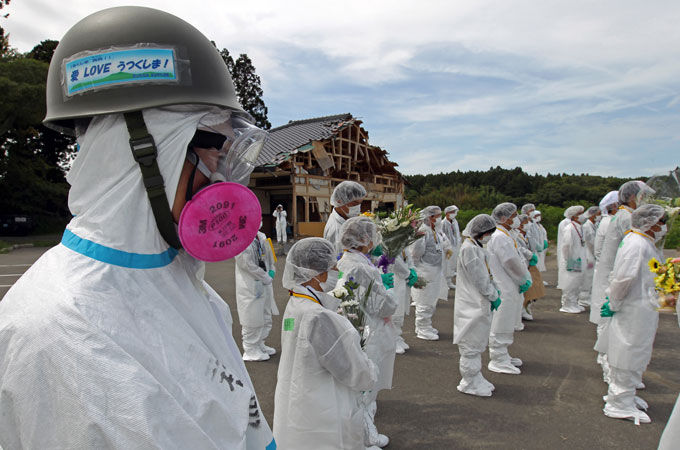
Residents of Ohkuma-cho attend a memorial service for the victims of the March 11 earthquake and tsunami on 24 July 2011 in Ohkuma-cho, Fukushima Prefecture, Japan, 20 km from the Fukushima Daiichi nuclear power plant [EPA]

Scientists and doctors are calling for a new national policy in Japan that mandates the testing of food, soil, water, and the air for radioactivity still being emitted from Fukushima's heavily damaged Daiichi nuclear power plant.

"How much radioactive materials have been released from the plant?" asked Dr Tatsuhiko Kodama, a professor at the Research Centre for Advanced Science and Technology and Director of the University of Tokyo's Radioisotope Centre, in a July 27 speech to the Committee of Health, Labour and Welfare at Japan's House of Representatives.

"The government and TEPCO have not reported the total amount of the released radioactivity yet," said Kodama, who believes things are far worse than even the recent detection of extremely high radiation levels at the plant.

There is widespread concern in Japan about a general lack of government monitoring for radiation, which has caused people to begin their own independent monitoring, which are also finding disturbingly high levels of radiation.

Kodama's centre, using 27 facilities to measure radiation across the country, has been closely monitoring the situation at Fukushima - and their findings are alarming.

According to Dr Kodama, the total amount of radiation released over a period of more than five months from the ongoing Fukushima nuclear disaster is the equivalent to more than 29 "Hiroshima-type atomic bombs" and the amount of uranium released "is equivalent to 20" Hiroshima bombs.

Kodama, along with other scientists, is concerned about the ongoing crisis resulting from the Fukushima situation, as well as what he believes to be inadequate government reaction, and believes the government needs to begin a large-scale response in order to begin decontaminating affected areas.

Distrust of the Japanese government's response to the nuclear disaster is now common among people living in the effected prefectures, and people are concerned about their health.

Recent readings taken at the plant are alarming.

When on August 2nd readings of 10,000 millisieverts (10 sieverts) of radioactivity per hour were detected at the plant, Japan's science ministry said that level of dose is fatal to humans, and is enough radiation to kill a person within one to two weeks after the exposure.

10,000 millisieverts (mSv) is the equivalent of approximately 100,000 chest x-rays.

It is an amount 250 per cent higher than levels recorded at the plant in March after it was heavily damaged by the earthquake and ensuing tsunami.

The operator of Japan's crippled Fukushima Daiichi nuclear power plant, Tokyo Electric Power Company (TEPCO), that took the reading, used equipment to measure radiation from a distance, and was unable to ascertain the exact level because the device's maximum reading is only 10,000 mSv.

TEPCO also detected 1,000 millisieverts (mSv) per hour in debris outside the plant, as well as finding 4,000 mSv per hour inside one of the reactor buildings.

The Fukushima disaster has been rated as a "level seven" on the International Nuclear and Radiological Event Scale (INES). This level, the highest, is the same as the Chernobyl nuclear disaster in 1986, and is defined by the scale as: "[A] major release of radioactive material with widespread health and environmental effects requiring implementation of planned and extended countermeasures."

The Fukushima and Chernobyl disasters are the only nuclear accidents to have been rated level seven on the scale, which is intended to be logarithmic, similar to the scale used to describe the comparative magnitude of earthquakes. Each increasing level represents an accident approximately ten times more severe than the previous level.

Doctors in Japan are already treating patients suffering health effects they attribute to radiation from the ongoing nuclear disaster.

"We have begun to see increased nosebleeds, stubborn cases of diarrhoea, and flu-like symptoms in children," Dr Yuko Yanagisawa, a physician at Funabashi Futawa Hospital in Chiba Prefecture, told Al Jazeera.

She attributes the symptoms to radiation exposure, and added: "We are encountering new situations we cannot explain with the body of knowledge we have relied upon up until now."

"The situation at the Daiichi Nuclear facility in Fukushima has not yet been fully stabilised, and we can't yet see an end in sight," Yanagisawa said. "Because the nuclear material has not yet been encapsulated, radiation continues to stream into the environment."

Health concerns

Al Jazeera's Aela Callan, reporting from Japan's Ibaraki prefecture, said of the recently detected high radiation readings: "It is now looking more likely that this area has been this radioactive since the earthquake and tsunami, but no one realised until now."

Workers at Fukushima are only allowed to be exposed to 250 mSv of ionising radiation per year.

Junichi Matsumoto, a TEPCO spokesman, said the high dose was discovered in an area that does not hamper recovery efforts at the stricken plant.

Yet radioactive cesium exceeding the government limit was detected in processed tea made in Tochigi City, about 160km from the troubled Fukushima Daiichi nuclear plant, according to the Tochigi Prefectural Government, who said radioactive cesium was detected in tea processed from leaves harvested in the city in early July.

The level is more than 3 times the provisional government limit.

Yanagisawa's hospital is located approximately 200km from Fukushima, so the health problems she is seeing that she attributes to radiation exposure causes her to be concerned by what she believes to be a grossly inadequate response from the government.

From her perspective, the only thing the government has done is to, on April 25, raise the acceptable radiation exposure limit for children from 1 mSv/year to 20 mSv/year.

"This has caused controversy, from the medical point of view," Yanagisawa told Al Jazeera. "This is certainly an issue that involves both personal internal exposures as well as low-dose exposures."

Junichi Sato, Greenpeace Japan Executive Director, said: "It is utterly outrageous to raise the exposure levels for children to twenty times the maximum limit for adults."

"The Japanese government cannot simply increase safety limits for the sake of political convenience or to give the impression of normality."

Authoritative current estimates of the health effects of low-dose ionizing radiation are published in the Biological Effects of Ionising Radiation VII (BEIR VII) report from the US National Academy of Sciences.

The report reflects the substantial weight of scientific evidence proving there is no exposure to ionizing radiation that is risk-free.

The BEIR VII estimates that each 1 mSv of radiation is associated with an increased risk of all forms of cancer other than leukemia of about 1-in-10,000; an increased risk of leukemia of about 1-in-100,000; and a 1-in-17,500 increased risk of cancer death.

Dr Helen Caldicott, the founding president of Physicians for Social Responsibility, a group that was awarded the Nobel Peace Prize in 1985, is equally concerned about the health effects from Japan's nuclear disaster.

"Radioactive elements get into the testicles and ovaries, and these cause genetic disease like diabetes, cystic fibrosis, and mental retardation," she told Al Jazeera. "There are 2,600 of these diseases that get into our genes and are passed from generation to generation, forever."

So far, the only cases of acute radiation exposure have involved TEPCO workers at the stricken plant. Lower doses of radiation, particularly for children, are what many in the medical community are most concerned about, according to Dr Yanagisawa.

"Humans are not yet capable of accurately measuring the low dose exposure or internal exposure," she explained, "Arguing 'it is safe because it is not yet scientifically proven [to be unsafe]' would be wrong. That fact is that we are not yet collecting enough information to prove the situations scientifically. If that is the case, we can never say it is safe just by increasing the annual 1mSv level twenty fold."

Her concern is that the new exposure standards by the Japanese government do not take into account differences between adults and children, since children's sensitivity to radiation exposure is several times higher than that of adults.

Al Jazeera contacted Prime Minister Naoto Kan's office for comment on the situation.

Speaking on behalf of the Deputy Cabinet Secretary for Public Relations for the Prime Minister's office, Noriyuki Shikata said that the Japanese government "refers to the ICRP [International Commission on Radiological Protection] recommendation in 2007, which says the reference levels of radiological protection in emergency exposure situations is 20-100 mSv per year. The Government of Japan has set planned evacuation zones and specific spots recommended for evacuation where the radiation levels reach 20 mSv/year, in order to avoid excessive radiation exposure."

The prime minister's office explained that approximately 23bn yen ($300mn) is planned for decontamination efforts, and the government plans to have a decontamination policy "by around the end of August", with a secondary budget of about 97bn yen ($1.26bn) for health management and monitoring operations in the affected areas.

When questioned about the issue of "acute radiation exposure", Shikata pointed to the Japanese government having received a report from TEPCO about six of their workers having been exposed to more than 250 mSv, but did not mention any reports of civilian exposures.

Prime Minister Kan's office told Al Jazeera that, for their ongoing response to the Fukushima crisis, "the government of Japan has conducted all the possible countermeasures such as introduction of automatic dose management by ID codes for all workers and 24 hour allocation of doctors. The government of Japan will continue to tackle the issue of further improving the health management including medium and long term measures".

Shikata did not comment about Kodama's findings.

Kodama, who is also a doctor of internal medicine, has been working on decontamination of radioactive materials at radiation facilities in hospitals of the University of Tokyo for the past several decades.

"We had rain in Tokyo on March 21 and radiation increased to .2 micosieverts/hour and, since then, the level has been continuously high," said Kodama, who added that his reporting of radiation findings to the government has not been met an adequate reaction. "At that time, the chief cabinet secretary, Mr Edano, told the Japanese people that there would be no immediate harm to their health."

Kodama is an expert in internal exposure to radiation, and is concerned that the government has not implemented a strong response geared towards measuring radioactivity in food.

"Although three months have passed since the accident already, why have even such simple things have not been done yet?" he said. "I get very angry and fly into a rage."

According to Kodama, the major problem caused by internal radiation exposure is the generation of cancer cells as the radiation causes unnatural cellular mutation.

"Radiation has a high risk to embryos in pregnant women, juveniles, and highly proliferative cells of people of growing ages. Even for adults, highly proliferative cells, such as hairs, blood, and intestinal epithelium cells, are sensitive to radiation."

'Children are at greater risk'

Early on in the disaster, Dr Makoto Kondo of the department of radiology of Keio University's School of Medicine warned of "a large difference in radiation effects on adults compared to children".

Kondo explained the chances of children developing cancer from radiation exposure was many times higher than adults.

"Children's bodies are underdeveloped and easily affected by radiation, which could cause cancer or slow body development. It can also affect their brain development," he said.

Yanagisawa assumes that the Japanese government's evacuation standards, as well as their raising the permissible exposure limit to 20mSv "can cause hazards to children's health," and therefore "children are at a greater risk".

Nishio Masamichi, director of Japan's Hakkaido Cancer Centre and a radiation treatment specialist, published an article on July 27 titled: "The Problem of Radiation Exposure Countermeasures for the Fukushima Nuclear Accident: Concerns for the Present Situation".

In the report, Masamichi said that such a dramatic increase in permitted radiation exposure was akin to "taking the lives of the people lightly". He believes that 20mSv is too high, especially for children who are far more susceptible to radiation.

"No level of radiation is acceptable, for children or anyone else," Caldicott told Al Jazeera. "Children are ten to 20 times more sensitive than adults. They must not be exposed to radiation of any level. At all."

In early July, officials with the Japanese Nuclear Safety Commission announced that approximately 45 per cent of children in the Fukushima region had experienced thyroid exposure to radiation, according to a survey carried out in late March. The commission has not carried out any surveys since then.

"Now the Japanese government is underestimating the effects of low dosage and/or internal exposures and not raising the evacuation level even to the same level adopted in Chernobyl," Yanagisawa said. "People's lives are at stake, especially the lives of children, and it is obvious that the government is not placing top priority on the people's lives in their measures."

Caldicott feels the lack of a stronger response to safeguard the health of people in areas where radiation is found is "reprehensible".

"Millions of people need to be evacuated from those high radiation zones, especially the children."

Dr Yanagisawa is concerned about what she calls "late onset disorders" from radiation exposure resulting from the Fukushima disaster, as well as increasing cases of infertility and miscarriages.

"Incidence of cancer will undoubtedly increase," she said. "In the case of children, thyroid cancer and leukemia can start to appear after several years. In the case of adults, the incidence of various types of cancer will increase over the course of several decades."

Yanagisawa said it is "without doubt" that cancer rates among the Fukushima nuclear workers will increase, as will cases of lethargy, atherosclerosis, and other chronic diseases among the general population in the effected areas.

Yanagisawa believes it is time to listen to survivors of the atomic bombings. "To be exposed to radiation, to be told there is no immediate effect, and afterwards to be stricken with cancer - what it is like to suffer this way over a long period of time, only the survivors of the atomic bombings can truly understand," she told Al Jazeera.

Radioactive food and water

An August 1 press release from Japan's MHLW said no radioactive materials have been detected in the tap water of Fukushima prefecture, according to a survey conducted by the Japanese government's Nuclear Emergency Response Headquarters.

The government defines no detection as "no results exceeding the 'Index values for infants (radioactive iodine)'," and says "in case the level of radioactive iodine in tap water exceeds 100 Bq/kg, to refrain from giving infants formula milk dissolved by tap water, having them intake tap water ... "

Yet, on June 27, results were published from a study that found 15 residents of Fukushima prefecture had tested positive for radiation in their urine.

Dr Nanao Kamada, professor emeritus of radiation biology at Hiroshima University, has been to Fukushima prefecture twice in order to take internal radiation exposure readings and facilitated the study.

"The risk of internal radiation is more dangerous than external radiation," Dr Kamada told Al Jazeera. "And internal radiation exposure does exist for Fukushima residents."

According to the MHLW, distribution of several food products in Fukushima Prefecture remain restricted. This includes raw milk, vegetables including spinach, kakina, and all other leafy vegetables, including cabbage, shiitake mushrooms, bamboo shoots, and beef.

The distribution of tealeaves remains restricted in several prefectures, including all of Ibaraki, and parts of Tochigi, Gunma, Chiba, Kanagawa Prefectures.

Iwate prefecture suspended all beef exports because of caesium contamination on August 1, making it the fourth prefecture to do so.
japan,cows

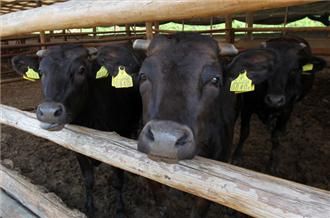
Due to caesium contaminated straw, beef exports have been banned in four Japanese prefectures [EPA]

Jyunichi Tokuyama, an expert with the Iwate Prefecture Agricultural and Fisheries Department, told Al Jazeera he did not know how to deal with the crisis. He was surprised because he did not expect radioactive hot spots in his prefecture, 300km from the Fukushima nuclear plant.

"The biggest cause of this contamination is the rice straw being fed to the cows, which was highly radioactive," Tokuyama told Al Jazeera.

Kamada feels the Japanese government is acting too slowly in response to the Fukushima disaster, and that the government needs to check radiation exposure levels "in each town and village" in Fukushima prefecture.

"They have to make a general map of radiation doses," he said. "Then they have to be concerned about human health levels, and radiation exposures to humans. They have to make the exposure dose map of Fukushima prefecture. Fukushima is not enough. Probably there are hot spots outside of Fukushima. So they also need to check ground exposure levels."

Caldicott said people around the world should be concerned about the ongoing nuclear crisis at the Fukushima Daiichi plant. Radiation that continues to be released has global consequences.

More than 11,000 tonnes of radioactive water has been released into the ocean from the stricken plant.
japan,tuna

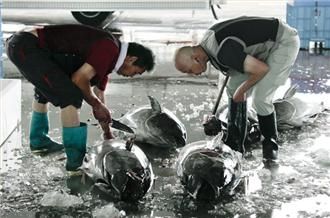
Scientists warn that tuna caught off the Pacific coastal prefecture in northern Japan are now at risk of being radioactive [EPA]

"Those radioactive elements bio-concentrate in the algae, then the crustaceans eat that, which are eaten by small then big fish," Caldicott said. "That's why big fish have high concentrations of radioactivity and humans are at the top of the food chain, so we get the most radiation, ultimately."

On August 6, the 66th anniversary of the US nuclear bombing of Hiroshima, Japanese Prime Minister Naoto Kan said: "Regarding nuclear energy, we will deeply reflect over the myth that nuclear energy is safe. We will thoroughly look into the cause of the [Fukushima] accident, and to secure safety, we'll implement fundamental measures while also decreasing the degree of dependence on nuclear power generation, to aim for a society that does not rely on nuclear power."

But doctors, scientists, agricultural experts, and much of the general public in Japan feel that a much more aggressive response to the nuclear disaster is needed.

Kodama believes the government needs to begin a large-scale response in order to begin decontaminating affected areas. He cited Japan's itai itai disease, when cadmium poisoning from mining resulted in the government eventually having to spend 800 billion yen to decontaminate an area of 1,500 hectares.

"How much cost will be needed if the area is 1,000 times larger?"

07 June 2011

Japan: Land of the rising silence: Junko Yoshida

TOKYO – I landed in Tokyo last week – for the first time since the great earthquake and tsunami hit Japan 75 days ago.

While the reason for my visit was to see my aging mother, I arrived with much trepidation— largely driven by what I didn’t know. I had no real feel for the magnitude of impact the recent disaster must have had on the country and its people. Everything I learned about what happened on March 11th — and what I deduced about it — seemed almost theoretical.

Walking through the customs at Narita airport initially calmed me. People, places and things were as efficient, clean and as orderly as always. Nothing at Narita was broken; the whole scene screamed out the Japanese national motto: “Business as usual.”

The rude awakening, however, hit when I attempted to buy a train ticket at the airport.  Narita Express trains are running on an irregular schedule, “due to the Great Tohoku Kanto earthquake,” according to a woman at the Japan Railway ticket counter. The next available Narita Express train I could take wasn’t due for three hours. While surprised, I told myself, “Oh, well. So, I’ll take the bus to Yokohama.”

Arriving at Yokohama station after 90 minutes on the bus, I discovered that Japan Railway had stopped running every escalator to every platform at every station. I could either hike up a stairway that looked like it went to the stars, or I could line up at one lonesome elevator — which I did, not because I’m not fit, but because I was schlepping a suitcase. I looked wistfully at a nearby escalator, chained and motionless, bearing a notice that read:  “Please cooperate with us in conserving energy.”

In the public rest room at the station, the toilets — thank God — were flushing. Everything seemed normal until I went to dry my hands. Every dryer had a notice, saying: “Please cooperate with us in conserving energy.”

I walked out waving my hands, and resigned to the message of post-tsunami Japan. Forget the little conveniences we’ve all come to take for granted.  It’s post-war all over again — and saving energy was everybody’s job, just like it had been in 1946.

Finally installed on a local train, I opened a newspaper. While the Asahi Shimbun had a number of stories related to the quake’s aftermath, the most eye-catching was a large map of Tohoku and Kanto.

It mapped out each village and town affected by the disaster, complete with death tolls, the missing and those evacuated to temporary facilities in each municipality. The newspaper also devotes a sizable space for a list of full names of “Those who passed away.” This has become a regular feature of each newspaper, day in and day out. Clearly, Japanese authorities are still discovering bodies. When those bodies are identified and publicly acknowledged, the newspaper adds a measure of finality.

But the thing that really freaked me out was the daily nuclear report (it looks a lot like a weather forecast map) – listing radiation levels in the air in various cities in Tohoku and Kanto. Again, this is now a regular feature -- both on NHK (Japan’s public broadcast) news, and in the paper.

I learned that Chigasaki, where my mother lives, registered 0.052 microsieverts per hour the day before my plane landed. Although this was a marked difference from the 6.6 microsieverts found in Namie-cho, a town 31 kilometers northwest of the stricken Fukushima Daiichi power plant, I wasn’t quite sure what to make of either number.

I was supposed to feel reassured about the low-level of radiation in the city I was heading for. But then, I also know that there’s no scientific data, at this point, on the impact on human bodies of a low-level dosage of radiation over a long period of time. It’s the unknown that fuels everyone’s fear.

The Tokyo Electric Power Co. (Tepco) six-reactor complex on Japan’s northeastern coast continues emitting radiation into the air and water. Tepco itself has said it will not be able to bring the three heavily damaged reactors under control until late this year or early next year. That’s the hard reality.
 
No solutions in sight for containment
While the plant continues to spew radioactivity, Japan’s largest electric power company will be pumping water into the damaged reactors and venting radioactive steam for a year or more. Tepco has built a low-level waste storage facility on the site. But it has no plans to move the waste elsewhere.

More bad news came from Tepco last Thursday [May 27th].  A new leak in a storage container had dumped an additional 60 tons of radioactive water into the environment.

It’s clear that no credible solutions are in sight to contain the deteriorating reactors. No concrete plans are laid out for how to deal with the growing nuclear waste, either.

Look no further than a recent controversy over the radiation exposure limit for schoolchildren in Japan.  The government set off an uproar in April when it set a radiation exposure limit of 20 millisieverts per year, the same dosage the International Commission on Radiation Protection recommends for nuclear plant workers.

Under pressure, the Japanese government announced last week that it will pay schools near the Fukushima nuclear plant to remove radioactive topsoil; it re-set the target radiation exposure for schoolchildren at one-twentieth the previous limit.

NHK had reported that before this new policy was announced, one school in Fukushima had jumped the gun and scraped the surface of the radioactive soil on its playground. The school’s quick action and independent thinking seemed laudable. But there was a hitch. They had no place to put the contaminated soil. No farmers could use it and no neighbors wanted it in their backyard. The school was told to keep the heap of radioactive soil in the middle of the schoolyard — for now.

The Japanese may be better prepared for earthquakes than any other country. But this is scant consolation in today’s post-earthquake and tsunami problem — the absence of a plan by the combined leadership of government and industry for the future, especially when it comes to dealing with nuclear energy.

It’s only been a week, but I’m starved for information. This is the big worry.

Or, more accurately put, I worry about the tendency for “self-restraint” among Japanese bureaucrats, government officials, politicians, industry leaders and even some in the academia here to keep disclosure of information at a minimum. Early in the crisis, for instance, the Japanese government had detailed information on radiation levels in towns near the Fukushima nuclear plant. Government officials only released the data via the Internet. The names of town were masked – reportedly to prevent mass flights of panicked people, causing “unnecessary” chaos or confusion in the society.

Similarly, in my humble opinion, Japanese consumers are as guilty as their so-called leaders.


Harmful rumors
“Fuhyo higai” is Japanese term I had never heard until I got here this time. Roughly translated as “harmful rumors,” it discourages anyone from discussing the safety of produce or products originating in affected areas. People who live in the “Fuhyo Higai” belt will be compensated by Tepco and the Japanese government. But it’s almost as though the government would prefer that people don’t know they’re victims until they get their compensation. I understand the need to keep “harmful rumors” from running rampant. But the Japanese consumers and the Japanese press are turning common sense into a moratorium on tough questions. It’s almost eerie.

I can live with fewer pachinko parlors and vending machines on the streets in Japan – both of which were labeled power hogs by the governor of Tokyo. I am OK with fewer neon signs in the Ginza; I am certainly for Japanese companies closing their offices at 4:30 p.m. so that they can turn off lights, sending employees home early and allowing them to work from home. Flex-time might even catch on in Japan.

The Japanese auto and auto-parts manufacturers decided to close on Thursdays and Fridays, operating instead on Saturdays and Sundays from July to September to limit power use during the midweek peak.

Because of the damage to power plants in the eastern part of the country, the government has set a target to cut electricity use by manufacturers by 15% this summer, when demand normally picks up with air-conditioner usage. Certain industries deemed critical to the Japanese economy – such as Japan’s semiconductor sector – are exempt from the regulation. But the nation is united behind the 15 percent conservation target. Most experts I talked to remain confident that Japan can stay in business without any serious power interruptions through the summer.

The Japanese are great at setting, communicating and achieving goals like that 15-percent cut. In contrast, we tend not to discuss, or make plans, or even face up to issues — like the nuclear mess in Fukushima — that require solutions more complicated than the March of Dimes. So, as we worry mutely about Fuhyo-Higai, deplore speculation, and tut-tut worst-case scenarios, little is said in public.

The silence is deafening.

It extends to the big uncertainty about the next big quake. What’s the worst that could happen?

Everyone knows the answer: Tokyo. Masaya Ishida, publisher of EE Times Japan, along with 13 million other people, lives here. He said, “The problem is that we don’t know when the next big one will hit us. It can be three years from now, or 300 years.”

Quiet, Ishida-san! If we don’t talk about it, maybe it will go away. 


11 April 2011

Water Transfers, Remote-Controlled Debris Clearing Underway at Fukushima Daiichi


07 April 2011

Precipitation RadNet Laboratory Analysis

This is as good as the info is gonna get in the US until they decide they have everything "under control". Earlier today I found a link stating that their hospital plan was inadequate - but it disappeared during a crash. I still have to hunt for it.


This link is very enlightening, if you are following along .. 

02 April 2011

ah, mephistophelis.: Fukushima Daiichi Nuclear Incident (ANALYSIS)


This is an "animated" power point examination of what happened at Fukushima.  It is EXCELLENT.  I suggest you push on the youtube video to see the entire video ... it's too large for the column and I can't adjust it, unfortunately.  Or go to Joanna's page which is linked at the bottom.


It only takes 6 minutes, but well worth the effort !!


Fukushima Daiichi Nuclear Incident (ANALYSIS)


A video transcoded & edited by yrs. truly, from the EXCELLENT powerpoint presentation originally done by Dr. Matthias Braun, March 29, 2011, under AREVA's umbrella, that (h/t Corporanon, again) came to my attention in a post over at the Energy From Thorium weblog,

From the introduction by Kirk Sorensen. 


Ever since the earthquake and tsunami struck the Fukushima-Daiichi reactor site in Japan, many of us nuclear bloggers have struggled to get good and consistent information on the event, and even more so in a form that is easy to depict and convey.

[snip]

Yesterday I was sent this absolutely outstanding presentation done by... engineer Dr. Matthias Braun, and I have found it to be a very easy to follow description of what took place at Fukushima-Daiichi and its implications. I saw no markings on the presentation listing it as “proprietary” ...

Please take a look and study the sequence of events to gain a better understanding of what happened at Fukushima-Daiichi and what it’s consequences might be.


html version here, pdf here.

Be seeing you.

01 April 2011

Fukushima Daiichi Nuclear Incident (ANALYSIS)


A video transcoded & edited by yrs. truly, from the EXCELLENT powerpoint presentation originally done by Dr. Matthias Braun, March 29, 2011, under AREVA's umbrella, that (h/t Corporanon, again) came to my attention in a post over at the Energy From Thorium weblog,

From the introduction by Kirk Sorensen. 


Ever since the earthquake and tsunami struck the Fukushima-Daiichi reactor site in Japan, many of us nuclear bloggers have struggled to get good and consistent information on the event, and even more so in a form that is easy to depict and convey.

[snip]

Yesterday I was sent this absolutely outstanding presentation done by... engineer Dr. Matthias Braun, and I have found it to be a very easy to follow description of what took place at Fukushima-Daiichi and its implications. I saw no markings on the presentation listing it as “proprietary” ...

Please take a look and study the sequence of events to gain a better understanding of what happened at Fukushima-Daiichi and what it’s consequences might be.


html version here, pdf here.

Be seeing you.

31 March 2011

“Definite”: Fukushima No. 3 has “long vertical crack” down side reactor vessel – Nuclear Exec.


The NY Times article has since been censored/altered.  Here is a mirror of the original article.  

Concerns about Reactor No. 3 have surfaced before. Japanese officials said nine days ago that the reactor vessel may have been damaged. …
A senior nuclear executive who insisted on anonymity but has broad contacts in Japan said that there was a long vertical crack running down the side of the reactor vessel itself. The crack runs down below the water level in the reactor and has been leaking fluids and gases, he said.
The severity of the radiation burns to the injured workers are consistent with contamination by water that had been in contact with damaged fuel rods, the executive said.
“There is a definite, definite crack in the vessel — it’s up and down and it’s large,” he said. “The problem with cracks is they do not get smaller.” …
Read the report here.

Fukushima radioactive fallout nears Chernobyl levels


Japan's damaged nuclear plant in Fukushima has been emitting radioactive iodine and caesium at levels approaching those seen in the aftermath of theChernobyl accident in 1986. Austrian researchers have used a worldwide network of radiation detectors – designed to spot clandestine nuclear bomb tests – to show that iodine-131 is being released at daily levels 73 per cent of those seen after the 1986 disaster. The daily amount of caesium-137 released from Fukushima Daiichi is around 60 per cent of the amount released from Chernobyl.
The difference between this accident and Chernobyl, they say, is that at Chernobyl a huge fire released large amounts of many radioactive materials, including fuel particles, in smoke. At Fukushima Daiichi, only the volatile elements, such as iodine and caesium, are bubbling off the damaged fuel. But these substances could nevertheless pose a significant health risk outside the plant.
The organisation set up to verify the Comprehensive Nuclear-Test-Ban Treaty(CTBT) has a global network of air samplers that monitor and trace the origin of around a dozen radionuclides, the radioactive elements released by atomic bomb blasts – and nuclear accidents. These measurements can be combined with wind observations to track where the radionuclides come from, and how much was released.
The level of radionuclides leaking from Fukushima Daiichi has been unclear, but the CTBT air samplers can shed some light, says Gerhard Wotawa ofAustria's Central Institute for Meteorology and Geodynamics in Vienna.

Ill wind

For the first two days after the accident, the wind blew east from Fukushima towards monitoring stations on the US west coast; on the third day it blew south-west over the Japanese monitoring station at Takasaki, then swung east again. Each day, readings for iodine-131 at Sacramento in California, or at Takasaki, both suggested the same amount of iodine was coming out of Fukushima, says Wotawa: 1.2 to 1.3 × 1017 becquerels per day.
The agreement between the two "makes us confident that this is accurate", he says. So do similar readings at CTBT stations in Alaska, Hawaii andMontreal, Canada – readings at the latter, at least, show that the emissions have continued.
In the 10 days it burned, Chernobyl put out 1.76 × 1018 becquerels of iodine-131, which amounts to only 50 per cent more per day than has been calculated for Fukushima Daiichi. It is not yet clear how long emissions from the Japanese plant will continue.
Similarly, says Wotawa, caesium-137 emissions are on the same order of magnitude as at Chernobyl. The Sacramento readings suggest it has emitted 5 × 1015 becquerels of caesium-137 per day; Chernobyl put out 8.5 × 1016 in total – around 70 per cent more per day.
"This is not surprising," says Wotawa. "When the fuel is damaged there is no reason for the volatile elements not to escape," and the measured caesium and iodine are in the right ratios for the fuel used by the Fukushima Daiichi reactors. Also, the Fukushima plant has around 1760 tonnes of fresh and used nuclear fuel on site, and an unknown amount has been damaged. The Chernobyl reactor had only 180 tonnes.
The amounts being released, he says, are "entirely consistent" with the relatively low amounts of caesium and iodine being measured in soil, plants and water in Japan, because so much has blown out to sea. The amounts crossing the Pacific to places like Sacramento are vanishingly small – they were detected there because the CTBT network is designed to sniff out the tiniest traces.

Dangerous isotopes

The Chernobyl accident emitted much more radioactivity and a wider diversity of radioactive elements than Fukushima Daiichi has so far, but it was iodine and caesium that caused most of the health risk – especially outside the immediate area of the Chernobyl plant, says Malcolm Crick, secretary of a United Nations body that has just reviewed the health effects of Chernobyl. Unlike other elements, he says, they were carried far and wide by the wind.
Moreover the human body absorbs iodine and caesium readily. "Essentially all the iodine or caesium inhaled or swallowed crosses into the blood," saysKeith Baverstock, former head of radiation protection for the World Health Organization's European office, who has studied Chernobyl's health effects.
Iodine is rapidly absorbed by the thyroid, and leaves only as it decays radioactively, with a half-life of eight days. Caesium is absorbed by muscles, where its half-life of 30 years means that it remains until it is excreted by the body. It takes between 10 and 100 days to excrete half of what has been consumed.
While in the body the isotopes' radioactive emissions can do significant damage, mainly to DNA. Children who ingest iodine-131 can develop thyroid cancer 10 or more years later; adults seem relatively resistant. A study published in the US last week found that iodine-131 from Chernobyl is still causing new cases of thyroid cancer to appear at an undiminished rate in the most heavily affected regions of Ukraine, Belarus and Russia.
Caesium-137 lingers in the environment because of its long half-life.Researchers are divided over how much damage environmental exposure to low doses has done since Chernobyl. Some researchers think it could still cause thousands of new cases of cancer across Europe.

29 March 2011

Fukushima Reactors Catastrophe: Radiation Exposure, Lies and Cover-up


Global Research, March 26, 2011

Fukushima Reactor # 4
Should the public discover the true health cost[s] of nuclear pollution, a cry would rise from all parts of the world and people would refuse to cooperate passively with their own death.” Dr. Rosalie Bertell. “No Immediate Danger,” xiii.
I write this article not just as a long-time environmental writer and author, but also as a survivor of the horrific 2003 1-million-acre Southern California FIRESTORM that took many lives (both human and millions of animals) during the three-and-a-half-weeks of out-of-control blazes and 400-foot-high walls of flames throughout San Diego and Orange counties. This nightmare blanketed a vast area from over the border into Tijuana up to just south of Los Angeles. Many “back county” areas and national and state parks were also destroyed. Hundreds of thousands of us could not evacuate because planes were grounded and the flames crossed over many freeways. Death and destruction continued for many years after. Many of my friends have died since then, due to fire-related illnesses, as the entire area was blanketed with a spew of toxins. As with the tragedy of September 11th, when Christy Todd Whitman said New York’s air was okay, our local “public” officials refused to monitor the air. Finally, unable to breathe, even with a high-tech respirator, I called the county with warnings. San Diego air “quality” samples were posted for only three days and then conveniently disappeared. Toxins were off the scale.
We had just 15 minutes to evacuate, when the helicopter flew overhead at 7 a.m. My entire neighborhood of 2,000 was destroyed, as well as 90 percent of all the wildlife! It was deliberately torched, and people and animals died. When we were finally allowed “home,” all that was left was burn, ash, skeletons of trees, and hot soil. I know what it means, day-to-day, to just barely survive a countywide catastrophe. I know what deep trauma is all about. I know how everyone in charge lies and deceives those of us in extremis. I know that when a place in the US is declared a “Federal Disaster” area, this quite literally means: “tough, you are on your own. There will be no help.” My heart aches for the people in Japan who are directly in harm’s way, while their government continues to make nuclear corporate profits the priority over the safety of millions of Japanese. It is criminal; and it happens all over.
During and for years after the FIRESTORM, public officials lied and deceived us. Insurance companies refused to honor thousands of policies, and many of us had to take them to court…but even the “justice” system is rigged. From the mayor and fire officials to the governor and a so-called “Blue Ribbon Commission,” the 14 arson fires and their causes were all covered-up. No one was held accountable. No one told us the truth. Further, we barely had any real help in clean-up or recovery –even if we had insurance. Knee-deep in warm ash, I shoveled it myself over seven-and-a-half months, with only 5 days of help. Thousands of us had to do it ourselves…even to getting our own Relief Center set up –again, because officials gave us the run-around.
A week-and-a-half into the Fukushima nuclear disaster, this is what is happening:
1. There are 4 reactors in various stages of collapse, releasing untold amount of dangerous radiation. Two more reactors may also be at risk.

2. The public generally has not been told that, in addition, there are 40 years of spent fuel rods on this already contaminated site. See:

3. Other fuel rods are fully exposed (meaning, unknown amounts of release of radiation) because they are no longer covered with the necessary 45-feet of water.

4. Last week the US refused to post online whatever radiation levels they were monitoring as radiation hits the West Coast and comes East. Then there were several reports that their monitors [all of them?] went off line, or crashed. It is doubtful that any official will report the truth. See:
The lies, criminality, and cover-up continue. This is how a totally broken system “works.” See:
and
Here is some additional excellent information about reactors and the extreme dangers of nuclear power:
1. Keith Harmon Snow’s “Nuclear Apocalypse in Japan. Lifting the Veil of Nuclear Catastrophe and cover-up”:
2. A report from the New York Academy of Science has been published on “Chernobyl: Consequences of the Catastrophe for People and the Environment”:
3. List of US nuclear plants:
Realistically, the Japanese catastrophe could last months or years, given the half-life of many radioactive particles. We don’t know, because no official or agency is reporting the truth, while we all are in danger of radiation exposure. How much? For how long? What kind (cesium, iodine, plutonium, strontium, uranium, all radioactive and each with different half life)? I think this catastrophe will turn out to be far worse than Chernobyl because again profits taken precedence over safety. See:
and
I URGE EVERYONE who has access to a good Geiger counter or other monitoring technology to monitor radiation levels –most especially on the West Coast; and all other US states, as it comes East on the Jet Stream. Some radiation has already been reported in Washington state. One website is already monitoring the situation in real time in Santa Monica (near Los Angeles), CA:
But we need much more collecting and reporting of radiation data. This is extremely urgent! Remember, for the past 12-15 years, our weather and air have been altered and deliberately manipulated. All along the Pacific Coast, from San Diego, Los Angeles, San Francisco, Portland, Seattle, and Vancouver, we need real-time radiation figures. This goes for Canada, too. We can post these results on this website and others, so we can have an accurate collective picture of the on-going radiation dangers we may be facing throughout North America. This is a highly dangerous, yet invisible and real threat to our safety and wellbeing –most especially for children who are most vulnerable! [I also remind readers that the ENTIRE Gulf of Mexico, and its nearby southern states, continues to be poisoned daily in an unmitigated crisis!]

From the very beginning, nuclear energy has been totally unsafe. Even early on in the 1950s, when there were nuclear tests in Nevada, citizens were never warned about the extreme toxicity and dangers to which they were exposed. For our entire lives, the nuclear industry has done decades-long media campaigns to give us misinformation and lies. It’s all about greed, but never about our safety or well-being. The US government has indemnified these companies, just as they have done with the pharmaceutical companies and their dangerous drugs. We are all expendable, except as uninformed consumers to buy their toxic products, and then for the next generation to repeat this insanity. With each new generation that is less well educated (dumbed-down, and often on prescription drugs from an early age), there is less information, no accountability, but millions more people who now are far more ill from an environment rife with thousands of poisons that surround our every move.

Some of the Nuclear Dangers include:
1. The reactors have design flaws, as does Fukushima’s Mark 1, built by GE. There are many of these same-designed reactors here in the US. On March 16, the NY Times reported some of these flaws. But, it is just the tip of the proverbial iceberg:

2. For radioactive nuclear waste, there is no safe or secure storage anywhere on this planet. There are 1,623 hazardous Superfund sites all over the US (such as Hanford Nuclear Reservation, built in 1942, near Richland, WA, and the now highly polluted Columbia River) leaking radioactive poisons on a daily basis for decades. There is another working nuclear facility, San Onofre, located between San Diego and Los Angeles along the beach right on the Pacific Ocean. This facility was built on the San Andreas fault, an active earthquake zone. The nuclear contamination is enormous and, every day, this puts us all at risk. Dr. Rosalie Bertell, one of the world’s leading authorities who has written extensively about the spectacular flaws and true costs of nuclear energy, notes: “The problem of secure storage of nuclear waste…remains dangerous for millennia.” [See also her quote at the beginning of this article.]

3. The half-life of many radioactive elements is thousands of years. There is no safe level of exposure! It’s all Orwellian media hype and corporate lies. The plutonium fuel used at Fukushima Unit 3 reactor uses MOX [mixed oxide], a plutonium-uranium fuel mixture. A single milligram of MOX is 2-million times more deadly that enriched uranium. NOTE: Plutonium-239 has a half-life of 24,000 years; and Uranium-235 has a half-life of 700-million years.

4. Hiroshima and Nagasaki Atomic bomb survivors are still being monitored. Birth defects, cancers, and miscarriages are high, just as these continue to be so at Chernobyl. This April 25, it will be 25 years since Chernobyl’s nuclear catastrophe. Sterility figures (for human and all other life) continue to increase. Nothing is healed. Nothing is fixed for millions of people. The children are most vulnerable, and suffer enormously.

5. The horrific on-going crisis in Iraq [an ancient culture was illegally invaded and destroyed!] is also greatly exacerbated due to US bombings of Depleted (Radioactive) Uranium, poisoning the entire population. Now, illness and birth defects are common throughout the entire Iraqi population. It is all for control of their oil. Afghanis were also illegally bombed with DU. Is Libya next with yet another illegal invasion and DU bombings? None of the real and tragic stories are ever reported by the mainstream corporate-controlled media. This is in violation of international law and the Geneva Conventions. This is heinous! However, it all is irrelevant how much harm is perpetrated on innocent civilian populations when criminals are in charge. War is big business, while the rest of our economy is in a state of deliberately orchestrated collapse.
Connecting the Dots of Harm

The new report (#53) from GEAB [Global Europe Assessment Bulletin] published on March 17 from Brussels also is important news not generally reported. GEAB has been quite accurate in their evaluations, as the US economy (everything but military expenditures) continues to be intentionally destroyed:

Last week world-renowned author Dr. Helen Caldicott, co-founder of Physicians for Social Responsibility, gave a lecture in Montreal on the dangers of the nuclear age. Dr. Caldicott has spent almost 40 years educating the public about the serious medical dangers surrounding this topic and the now very urgently needed changes in human behavior to stop the extensive environmental devastation. Although the lecture has not been posted online, here is a recent interview (March 12):

Finally, there are other enormous concerns regarding our safety and well-being, because there is absolutely NO PRECAUTIONARY PRINCIPLE in place. That is the elite insider’s plan: grave harm! We MUST address these vital issues on a grassroots level, because those in charge are the ones causing us such extreme injury. We will need the help of independent scientists and health-care providers.  It is a given that we no longer have any real air “quality.” What we are breathing with every single breath is a hazardous, now plasma-state, spew.(1) This impacts our immune system at the celluar DNA level. How will the thousands of tons of aerosolized poisons in Chemtrails, sprayed around the world, interact with radioactive materials (especially those with a long half life)? What might be the detrimental synergistic interaction(s) among the nano-Morgellons-fibers (that Clifford Carnicom has been researching microscopically for a decade(2), found in human, animals, and environmental samples), the nano-particles of fiber-coated aluminum, and now-unknown quantities of various radioactive particles?

How might all of this also interact with possibly thousands of tons of deadly Corexit 9500 dispersant sprayed (on land and over water for many months) and the unconscionable release of “Synthia,” a genetically modified synthetic genome bacteria now replicating exponentially throughout the Gulf of Mexico.(3) Tragically, the Gulf is now a biological and chemical war zone. However, it is all happening on an invisible level. This hazardous Gulf spew is in addition to what is heading our way from Japan to North America and thence to Europe and Asia.  We must wake up. There is much we can do! Will YOU help?

NOTES:
1. Clifford Carnicom discusses the plasma state and other vital environmental issues in a recent web interview:
2. “The Biggest Crime of All Time.” March 1, 2011:
“Permanent Biological Contamination of the Gulf”:
and Michael Edwards. “It’s not wise to fool other Nature.” This is part 1 of 4:http://worldvisionportal.org/wvpforum/viewtopic.php?f=55&t=1031
Essential reading:
Dr. Rosalie Bertell. “No Immediate Danger” and “ Planet Earth: The Latest Weapon of War.”
Theo Colburn et al. “Our Stolen Future.”
Pierpaolo Mittica et al. “Chernobyl. The Hidden Legacy.” London: Trolley, Ltd., 2007. There is a section in this book written by Dr. Bertell.
Educator and environmental writer Dr. Ilya Sandra Perlingieri is the author of the highly acclaimed book, “The Uterine Crisis.” London’s “The Ecologist” calls this book “an inspiration.” She is an Associate of the Carnicom Institute.

Ilya Sandra Perlingieri is a frequent contributor to Global Research. Global Research Articles by Ilya Sandra Perlingieri